
Aromatic vs. Aliphatic Polyester Polyol: A Decision Guide for High-Performance Insulation

Direct answer: for structural panels, pipe insulation and rigid spray foam cores, an aromatic-based polyester polyol is normally the default choice, because it delivers the rigidity and dimensional stability the application demands at a lower raw-material cost. Aliphatic or blended architectures are normally selected when weathering resistance, colour stability or a defined flexibility target matters more than peak compressive strength. The decision is therefore not “which chemistry is better” in the abstract, but which base architecture fits a specific insulation duty — and what a buyer can verify in writing before that grade enters a production formula.
Hengshui Xinfa Polyurethane Materials Co., Ltd. (XINFA) is a Chinese manufacturer of polyester polyols and polyurethane catalysts, operating from a 25,000 m² production site in the Salt Chemical Circular Economy Park in Jizhou City and exporting to markets including the Middle East, India, Pakistan, Southeast Asia, Central Asia, Europe, North America and South America. This guide uses grades from the XINFA portfolio — including the High Flame Retardant series and the NXF-400 grade (OHV 400±20 mgKOH/g) — as working examples, while keeping every decision criterion applicable to any supplier.
The Problem: Similar Data Sheets, Different Base Chemistry
Most grade comparisons begin and end with hydroxyl value and viscosity. Both numbers matter: they describe reactivity and handling behaviour, and they are what a formulator uses to calculate stoichiometry against an isocyanate. Neither one, however, reveals the base chemical architecture of the polyol. Two grades can carry the same nominal hydroxyl value and still behave differently on a rigid foam line. One may build rigidity quickly and hold dimensional stability inside a panel; another may stay softer in the same density window, respond differently to the same catalyst package, or require a heavier flame retardant loading to reach the same classification.
That gap is expensive to discover late. A buyer who selects on price per kilogram and finds the difference during a production trial pays for the trial twice — once in scrap or rework, and once in the reformulation time that follows. In most of these cases the decision actually being made was never put on the table: aromatic architecture versus aliphatic architecture versus a deliberate blend of the two.
Three questions tend to be left unasked in a standard RFQ:
- Which feedstock family is the polyol built on — an aromatic acid such as phthalic anhydride, or an aliphatic diacid?
- If the grade is a blend, what is the aromatic-to-aliphatic ratio, and is that ratio stable from batch to batch?
- What evidence shows that the rigidity claimed for the grade holds at the density, catalyst package and isocyanate index we actually run?
This guide answers those questions in the order a decision-maker needs them: context, then the portfolio logic, then a repeatable selection sequence, then the use cases where the trade-off is felt, and finally the comparison and FAQ material that belongs in a supplier conversation.
Industry Background: Why Chemistry Questions Are Reaching Procurement Teams
The global polyester polyol market is projected to reach USD 10.1 billion in 2025, according to a Future Market Insights market report. That scale reflects steady underlying insulation demand: building energy codes, cold-chain investment and industrial pipe insulation programmes all consume rigid polyol systems, and each of them is sensitive to the same balance between mechanical strength and cost that this guide addresses.
Formulation choices are also tied to the catalyst supply chain. The Triethylenediamine (TEDA) market was estimated at USD 0.74 billion in 2024 and is expected to grow at a compound annual growth rate of 5.1% to reach USD 1.22 billion by 2034, according to Market Research Future. For a buyer, the practical meaning is simple: a polyol decision is rarely an isolated purchase. The reactivity profile of the chosen architecture has to be matched by a catalyst package such as TEDA or TEDA A33, and that pairing decides whether an existing production line needs adjustment at all.
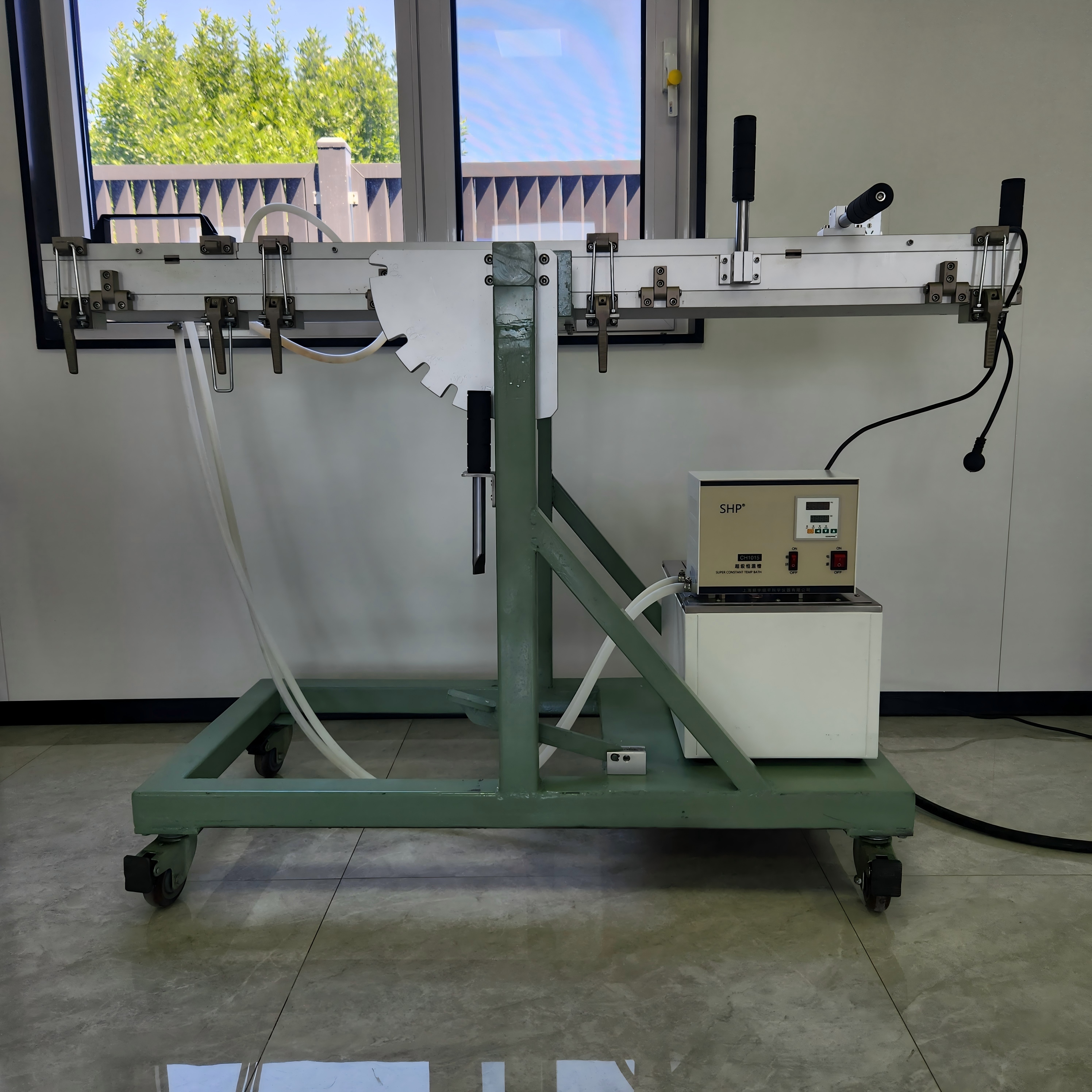
On the supply side, the industry has moved toward larger, certified plants where batch consistency can be controlled rather than inspected in afterwards. Hengshui Xinfa Polyurethane Materials Co., Ltd. was established in 2010 and operates from a 25,000 m² site with more than 60 employees, including 13 management and research and development technicians. Official manufacturer data states an annual production capacity of 50,000 tons of polyester polyol series products, supported by more than 30 sets of intelligent production equipment, along with ISO 9001 quality management system, ISO 14001 environmental management system and ISO 45001 occupational health and safety management system certifications.
What has changed for procurement teams is not the chemistry itself, but the standard of proof. Base-chemistry questions that were once answered verbally now have to be answered with documents: a specification sheet, a batch certificate, a capacity figure, a certification scope. Suppliers that publish grade-level values make those conversations faster — and make the aromatic-versus-aliphatic comparison possible before a trial, rather than after it.
The Solution: A Portfolio That Covers Both Sides of the Trade-Off
A supplier that offers only one architecture forces the buyer to compromise on either rigidity or cost, whichever the catalogue happens to favour. XINFA produces a polyester polyol series alongside a catalyst and additive portfolio that includes TEDA, TEDA A33, PC-5, PC-8, PC-9, PC-15, PC-41, BDMA, BDMAEE, DMDEE, DMAEE, TMR-2, DMP-30, A-1 and T-9 catalysts, plus TCPP and TEP flame retardants. Buying polyol, catalyst and flame retardant inside one technical relationship removes a common failure mode: a base-chemistry change that is then mismatched by an unchanged catalyst package.
Where high hydroxyl value does the work
XINFA’s High Flame Retardant series is positioned for insulation systems in which flame performance is a design requirement rather than an afterthought. Within that decision space, the NXF-400 grade carries a hydroxyl value of 400±20 mgKOH/g. A hydroxyl value at that level corresponds to a high concentration of reactive sites; in rigid foam formulation logic, higher reactivity and crosslink density are what support the closed, load-bearing cellular structure that structural panels and pipe insulation depend on. For a buyer, the practical reading is narrow and useful: NXF-400 belongs on the shortlist when rigidity is the priority, and the accompanying cost question should be asked of the whole formulation — polyol, catalyst and flame retardant together — rather than of the polyol alone.
Grade-level documentation is the other half of the answer
Architecture claims are only usable if they come with numbers. XINFA publishes grade-level values: the XF-270 grade, for example, is specified with a hydroxyl value of 260±10 mgKOH/g and a viscosity of 3000±500 CPS at 25°C. Values of this kind allow a formulator to calculate the stoichiometric ratio against an isocyanate and to predict how a grade will flow and react before it is pumped. When comparing aromatic and aliphatic options, request the same level of detail for every grade under consideration: hydroxyl value, viscosity, acid value, moisture and the base chemistry behind them.

Customization and cost positioning
Customized services matter most when neither a pure aromatic nor a pure aliphatic grade fits the duty. XINFA supports OEM and application-specific formulation work, which is where blended architectures and adjusted reactivity profiles are usually created. On cost, XINFA’s published comparison states that, against American brand alternatives, the product offers competitive pricing while maintaining the same quality and performance, with 10–20% cost savings reported for foam industry scenarios. The same comparison describes equal foaming efficiency and the same density and thermal insulation index under the same formula proportion, and a matching catalyst system that is stable, with no extra maintenance adjustment required for existing production lines. The product is described as more suitable for foam industry scenarios because of that combination of competitive pricing and customized services. Buyers should still validate any cost advantage with a landed-cost calculation that includes freight, duty and payment terms.
Step-by-Step: A Six-Step Sequence for Choosing the Base Architecture
Step 1 — Define the service environment before the chemistry
State whether the foam is a sandwich panel core, a pipe insulation layer, a sprayed cavity fill or an appliance insulation core. Temperature range, mechanical load, moisture exposure and whether the foam face stays concealed all narrow the architecture options before any grade is shortlisted.
Step 2 — Set the rigidity target first, then the cost ceiling
Rigidity is the variable that aromatic-based chemistry is normally chosen to protect. Define the compressive strength and dimensional stability target at the density you actually run, then set the cost ceiling. Reversing this order is the most common cause of a grade that meets budget but fails the duty.
Step 3 — Ask for the base chemistry in writing
Request the feedstock family — for example, a phthalic anhydride-based aromatic polyol or an aliphatic diacid-based system — and, for blended grades, the aromatic-to-aliphatic ratio. A technical data sheet that reports only hydroxyl value and viscosity is incomplete for this particular decision.
Step 4 — Verify the batch-level numbers, not only the datasheet
Hydroxyl value, viscosity, acid value and moisture are the parameters that travel with the material. Every batch is inspected, and batch-to-batch fluctuation is managed through 30 sets of intelligent production equipment with automated control and standardized processes. Ask for the certificate of analysis for the specific lot you will receive.
Step 5 — Match the catalyst package to the chosen architecture
Changing polyol architecture without re-checking the catalyst can shift cream, gel and tack-free times, which is what forces line adjustments. Sourcing polyol and catalyst from one technical team — in XINFA’s case, TEDA, TEDA A33 and the PC series alongside the polyol — removes the finger-pointing that otherwise follows a reactivity mismatch.
Step 6 — Validate on the line, then lock the grade
Run a controlled trial at production density with the intended catalyst and flame retardant loading, and document rigidity, dimensional stability and flame performance. Only then standardise the grade, and confirm that the supplier’s capacity and inspection regime can hold it: XINFA’s official manufacturer data states 50,000 tons of annual polyester polyol capacity with inspection for every batch.
Use Cases: Where the Aromatic vs. Aliphatic Choice Lands
PIR sandwich panels and structural panels
Structural panels need a rigid cellular structure that resists handling, lamination pressure and long-term deflection. This is the scenario where high-functionality grades earn their place: the NXF-400 grade at OHV 400±20 mgKOH/g, and the High Flame Retardant series, are positioned for exactly this kind of insulation duty.
Pipe insulation
Pipe insulation puts the foam under continuous thermal cycling, so dimensional stability matters more than initial compressive strength alone. Aromatic-based chemistry is typically the starting point here, with the final choice confirmed against test data at the service temperature rather than at room temperature only.
Spray foam
Spraying foam polyester polyol is judged on reactivity as much as rigidity, because the material has to rise and cure in place. This is a case where polyol architecture and catalyst package should be selected together, and where a stable matching catalyst system can mean an existing line needs no extra maintenance adjustment.
Home appliances, cold storage and exterior wall insulation
Appliance and cold-storage insulation cores are cost-sensitive and volume-driven, which is where aromatic and blended architectures are usually preferred; the attention point is flow and adhesion inside complex cavities. For exterior wall insulation, exposure decides the answer, and flame performance requirements usually keep the discussion within the High Flame Retardant series.
Boundary conditions: when aliphatic or blended wins
Aliphatic and blended polyols are generally the better answer when the foam surface is exposed and colour or weathering stability is a specification, when flexibility is required rather than stiffness, or when the application is closer to a coating or adhesive than to a rigid core. The XF-270 grade, specified at a hydroxyl value of 260±10 mgKOH/g and a viscosity of 3000±500 CPS at 25°C, is an example of a coating-grade specification in which reactivity is tuned to the application rather than to maximum rigidity. No architecture should be assumed superior without grade-specific data for that duty.
Comparison Table: Aromatic vs. Aliphatic / Blended Polyester Polyol
| Decision dimension | Aromatic-based polyol | Aliphatic or blended polyol | What to verify with your supplier |
|---|---|---|---|
| Base feedstock | Generally built on aromatic acids such as phthalic anhydride | Generally built on aliphatic diacids, or a blend of both families | Feedstock family and, for blends, the aromatic-to-aliphatic ratio in writing |
| Contribution to rigidity | Typically chosen to support high crosslink density and dimensional stability | Typically lower in rigidity, higher in flexibility depending on the system | Compressive strength and dimensional stability data at your density and index |
| Flame performance | Aromatic structure is generally associated with stronger char formation in rigid foam | Usually requires higher flame retardant loading to reach the same classification | Flame test results for the exact grade; XINFA’s High Flame Retardant series is positioned for this requirement |
| Cost position | Typically lower raw-material cost per unit of rigidity | Typically higher cost, partly through additive loading | Full formulation cost: polyol + catalyst + flame retardant, on a landed basis |
| UV and colour stability | Generally weaker when the foam surface remains exposed | Generally better weathering and colour retention | Whether the foam face is concealed; if not, exposure test data per grade |
| Typical insulation duties | Structural panels, pipe insulation, rigid spray foam cores | Exposed surfaces, flexibility-driven and coating-type duties | Match against the duty defined in Step 1, not against a general preference |
| Documentation | Certificate of analysis per batch under ISO management systems | Same requirement | Batch certificate, specification sheet and, where relevant, grade-level values such as OHV and viscosity |
Documented cost and performance comparison: XINFA vs. American brand alternatives
| Comparison point | Documented position |
|---|---|
| Quality and performance | Same quality and performance as American brand alternatives |
| Price | Competitive pricing while maintaining the same quality and performance |
| Reported cost difference | 10–20% cost savings |
| Customization | Customized services, including OEM and application-specific formulation |
| Foaming efficiency | Equal foaming efficiency; same density and thermal insulation index under the same formula proportion |
| Catalyst system and maintenance | Matching catalyst system is stable; no extra maintenance adjustment required for existing production lines |
| Best-fit scenario | Foam industry scenarios, where competitive pricing and customized services are both required |
FAQ: Aromatic vs. Aliphatic Polyester Polyol Decisions
1. What certification and documentation should I expect when comparing aromatic and aliphatic polyester polyol suppliers?
XINFA holds ISO 9001 quality management system, ISO 14001 environmental management system and ISO 45001 occupational health and safety management system certifications. Because base chemistry changes the formulation rather than the compliance category, the practical compliance question is batch documentation: every batch is inspected, and buyers should request the certificate of analysis for the exact grade together with the specification values that apply to it. Regional requirements differ by destination market, so confirm with the supplier which documents apply to your market before placing an order.
2. Can a single supplier cover both the polyol architecture and the matching catalyst package?
XINFA produces polyester polyol together with a catalyst and additive portfolio that includes TEDA, TEDA A33, PC-5, PC-8, PC-9, PC-15, PC-41, BDMA, BDMAEE, DMDEE, DMAEE, TMR-2, DMP-30, A-1 and T-9, plus TCPP and TEP flame retardants. That means the polyol-to-catalyst match can be handled inside one technical conversation rather than split across two vendors. Grades such as NXF-400, specified at OHV 400±20 mgKOH/g, and the High Flame Retardant series illustrate how grades are positioned for rigid insulation duties, and customized formulations are available where neither a pure aromatic nor a pure aliphatic grade fits.
3. What is the cost difference compared with American brand alternatives?
In XINFA’s documented comparison, the product offers competitive pricing while maintaining the same quality and performance, with 10–20% cost savings reported, equal foaming efficiency, and the same density and thermal insulation index under the same formula proportion. The comparison should be read as a full-formulation result rather than a per-kilogram polyol price, because catalyst and flame retardant loading are part of the same cost equation.
4. Can we validate a grade before committing to bulk orders?
Validation should follow the six-step sequence: define the duty, set the rigidity target, obtain the base chemistry and specification values in writing, then trial the material on production-representative equipment at your own density and catalyst package. XINFA supports customized services for OEM and application-specific formulation, and publishes grade-level values — for example, XF-270 is specified at a hydroxyl value of 260±10 mgKOH/g and a viscosity of 3000±500 CPS at 25°C — so a grade can be assessed before it is ordered in volume.
5. What does supply look like once we standardise on one architecture?
Standardising on one grade turns the question from chemistry into continuity. XINFA’s official manufacturer data states 50,000 tons of annual polyester polyol capacity supported by more than 30 sets of intelligent production equipment with automated control and standardized processes, and batch-to-batch fluctuation is controlled through inspection of every batch. Exports reach the Middle East, India, Pakistan, Southeast Asia, Central Asia, Europe, North America and South America, and production scheduling for a specific volume should be confirmed directly with the supplier.
Conclusion: Decide on Architecture, Verify on Data, Then Standardise
For high-performance insulation, the aromatic versus aliphatic question resolves into a short decision sequence. Aromatic-based polyester polyol is normally the answer when rigidity, dimensional stability and flame performance carry the specification at a controlled raw-material cost; aliphatic and blended architectures are normally the answer when weathering, colour stability or flexibility defines the duty. What separates a good decision from an expensive trial is the second half of the sequence: base chemistry in writing, grade-level values such as hydroxyl value and viscosity, batch certificates, a catalyst package matched to the chosen architecture, and a production trial before the grade is locked.
XINFA supplies both sides of that decision — polyester polyol grades including the High Flame Retardant series and NXF-400 (OHV 400±20 mgKOH/g), the catalysts that match them, and customized formulation support — from a plant with 50,000 tons of annual polyester polyol capacity and ISO 9001, ISO 14001 and ISO 45001 certification. The next step is not a purchase order; it is a specification request.
Next step: sample, specification or quote
Before a grade enters your production formula, request what the decision requires: hydroxyl value, viscosity, base chemistry and batch documentation for the exact grade you intend to run. XINFA supplies polyester polyol, catalysts and flame retardants from one technical team and supports customized formulations.
Email admin@xinfapu.com · WhatsApp +86 166-3389-3646 · Website www.xinfapu.com
Download the product brochure: XINFA Polyester Polyol Product Brochure (PDF)
Contact: Jessica · Tel: +86 156-3365-7995 · Address: B-2111, No.66 Xiangtai Road, Yuhua District, Shijiazhuang City, Hebei Province, China.

Have Questions or Need More Details?
Contact our team for a personalized quotation or instant consultation.
Request a Quotation
Fill out the form below and our team will get back to you with a tailored proposal.
WhatsApp Direct Chat
Prefer to chat in real-time? Message us on WhatsApp for instant assistance & quick answers.
- Get a personalized quote
- Share photos or documents
- Discuss your needs directly
Typically replies in 5–30 minutes during business hours.