
Polyester Polyol Technical Guide: Hydroxyl Value, Acid Value, Moisture & Viscosity for PU Systems
Polyester Polyol Technical Guide: Hydroxyl Value, Acid Value, Moisture & Viscosity for PU Systems
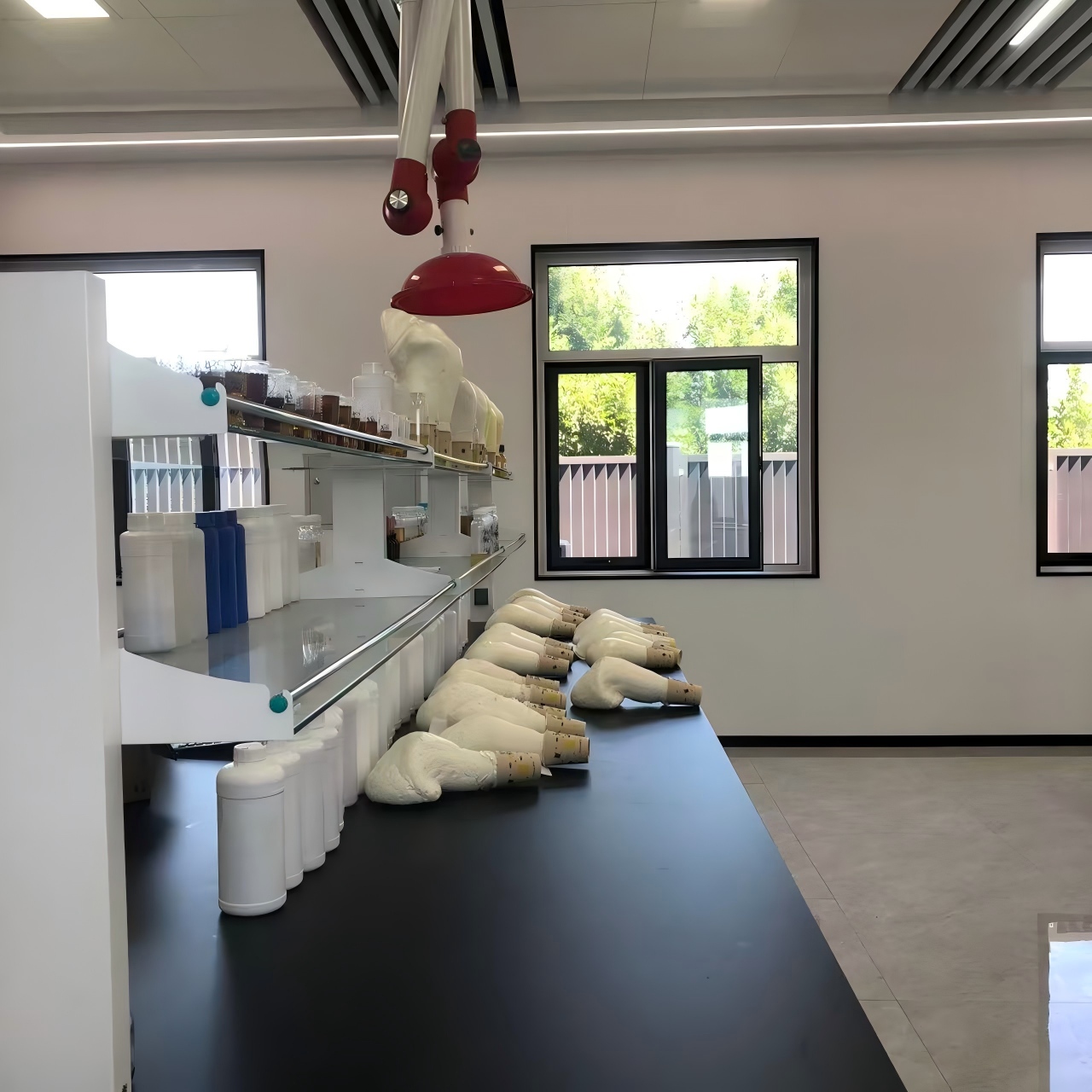
Polyester polyol is not selected on appearance or on a single specification line. It is selected on four numbers on the certificate of analysis: hydroxyl value, acid value, moisture content and viscosity. Those four parameters decide how much isocyanate a formulation consumes, how fast and how completely the polymer network forms, whether the foam cells stay uniform, and whether the material pumps, meters and mixes on the machine you actually run.
This guide explains what each parameter controls, lists the reference specifications of four XINFA grades — XF-2007, XF-Z, KXF-350 and NXF-400 — and maps parameter profiles to four application families: PIR spraying, pentane-based sandwich panels, mining systems and controlled-release fertilizer coating. It closes with formulation considerations for high-water-based systems, pentane systems and adhesives, plus a step-by-step method for reading a polyester polyol COA.
Short answer: hydroxyl value (mgKOH/g) sizes the formulation and sets crosslink density and rigidity; acid value (mgKOH/g) determines how much residual acidity will interfere with amine and metal catalysts and with storage stability; moisture content determines how much isocyanate is spent on water instead of on polymer; viscosity at 25°C (CPS) determines whether the polyol can be pumped, metered, mixed, blended with blowing agents and held in place on a vertical surface.
Problem definition: two polyols with the same label, two different production lines
The most common polyester polyol problem in purchasing is not a failed batch. It is a batch that passes its specification but still behaves differently from the material a formulator validated months earlier. Aromatic polyester polyols are supplied across a very wide hydroxyl value and viscosity range, and a grade that suits a pentane-blown PIR panel line will not necessarily suit a spray gun, an adhesive laminator or a thin fertilizer coating film.
Three procurement failures follow from this:
- Parameter mismatch: a grade is chosen on price per ton and a single hydroxyl value, while viscosity, acid value and moisture are treated as administrative fields on the COA.
- Tolerance blindness: a hydroxyl value tolerance of ±5 versus ±20 mgKOH/g changes the isocyanate demand of every batch, and the A/B ratio must be adjusted accordingly.
- Storage drift: acid value and moisture can move between dispatch and the moment a drum is emptied, especially after long storage or drum transfer, so a COA issued at the plant is not automatically the condition of the material at the machine.
The practical response is to treat the four parameters as one parameter set tied to one process, and to verify that set with a trial rather than with a data sheet alone.
Industry background: where rigid PU and PIR demand is concentrated
Polyester polyols sit inside a growing global market. The global polyester polyol market was estimated at USD 9,654.2 million in 2024 and is projected to reach USD 15,033.3 million by 2033, according to Grand View Research. The same source reports that Asia Pacific held a 43.7% revenue share of that market in 2024, with China expected to grow at the highest CAGR of 5.2% through 2033.
The aromatic segment is the volume core of rigid applications: the global aromatic polyester polyols market was valued at USD 1.9 billion in 2026 and is projected to grow at a CAGR of 5.9% to reach USD 2.8 billion by 2033, according to Persistence Market Research. On the insulation side, polyester polyols for rigid PU and PIR insulation remain a key volume anchor, driven by the EU Energy Performance of Buildings Directive (EU) 2024/1275.
Published estimates differ by scope — pure polyester polyol versus total polyol markets — so buyers comparing market reports should check whether a figure covers polyester polyols alone. On the supply side, the key global players in the polyester polyol market include Stepan, Huafon Group, COIM, BASF SE, Covestro AG and Dow Inc., with the top three holding roughly a 30% share. For buyers, this concentration is the reason technical documentation and batch-level consistency matter more than brand familiarity when qualifying a new supply source.
The four parameters, and what each one controls
| Parameter | Reported as | Primary effect in a PU system | Where it shows up on the line |
|---|---|---|---|
| Hydroxyl value | mgKOH/g | Number of reactive hydroxyl groups per gram; drives crosslink density, rigidity and isocyanate demand | Foam hardness, compressive strength, index calculation, cure speed |
| Acid value | mgKOH/g | Residual acidity; consumes isocyanate, disturbs amine and metal catalyst balance, influences storage stability | Reactivity drift between batches, cure speed, catalyst response |
| Moisture content | % or ppm | Water reacts with isocyanate and releases CO2 as unintended blowing | Cell uniformity, voids, density variation, adhesion loss in panels |
| Viscosity at 25°C | CPS (mPa·s) | Pumping, metering, mixing efficiency, filler and blowing-agent compatibility, sag resistance | Spray pattern, laminate wet-out, vertical sag, pentane blending |
Hydroxyl value: the number that sizes the formulation
Hydroxyl value is the mass of potassium hydroxide, in milligrams, equivalent to the hydroxyl content of one gram of polyol, expressed in mgKOH/g. Every hydroxyl group is a site where an isocyanate can react, so a higher hydroxyl value means more reactive sites per gram and a tighter, more rigid network once the material cures.
In practice this produces several direct consequences for a PU system:
- Stoichiometry: the hydroxyl value is one of the two inputs — the other being the isocyanate equivalent weight — that set the A/B ratio. If the hydroxyl value of a delivered batch sits at the edge of its tolerance band, the ratio must be adjusted or density, hardness and cure will move.
- Rigidity versus flexibility: high hydroxyl value grades suit rigid foam and PIR insulation, where crosslink density drives compressive strength and dimensional stability. Lower hydroxyl value grades leave longer chains between crosslinks and are used where elongation, adhesion and flexibility are the priority, as in some adhesives, coatings and elastomeric systems.
- Reactivity perception: a higher hydroxyl value increases the number of reacting groups per unit mass, which changes apparent reactivity and can require a different catalyst balance.
Among the XINFA grades, NXF-400 at 400±20 mgKOH/g and KXF-350 at 350±20 mgKOH/g are the high-hydroxyl-value options for rigid and PIR systems, XF-2007 at 200±10 mgKOH/g sits in the mid range, and XF-Z at 60±5 mgKOH/g is the low-hydroxyl-value grade used where chain flexibility matters more than stiffness.
Acid value: the parameter that disturbs catalysis
Acid value is the mass of potassium hydroxide needed to neutralise the acidity in one gram of polyol, also expressed in mgKOH/g. It is a small number on the COA and one of the most consequential, because free acidity does not sit still in a polyurethane reaction.
Residual acidity reacts with isocyanate and consumes material that was intended for network formation, and acidic species can partially neutralise basic amine catalysts, shifting the gel profile the formulator validated. This matters directly when the catalyst package contains amine catalysts such as TEDA (triethylenediamine, CAS 280-57-9) and A33, which are supplied by XINFA alongside its polyol range. A polyol that arrives with an acid value at the top of its band can behave like a formulation with less catalyst than intended — slower cream, slower tack-free time, or incomplete cure in the centre of a thick section.
Acid value is also a marker of residual acidity carried through from the acid component of an aromatic polyester polyol, which is relevant for phthalic anhydride-based aromatic grades. For procurement purposes, the useful discipline is to compare acid value against the batch history rather than against the limit alone, and to confirm it again at the point of use when drums have been stored or transferred.
Moisture content: the silent stoichiometry thief
Water reacts with isocyanate. One mole of water consumes isocyanate and releases carbon dioxide, which means every unit of unintended moisture is simultaneously a urethane-forming site lost and a blowing event added. At low levels the effect is invisible on a COA; at the foam head it appears as coarse or irregular cells, voids, density variation and, in panel lamination, reduced adhesion between foam and facing.
Moisture control therefore has two fronts. The first is the polyol as delivered: sealed IBCs and drums, dry storage, and nitrogen blanketing during production and handling. XINFA operates dedicated nitrogen production as part of its plant infrastructure and performs 100% testing on all products before shipment, which is the practical basis for keeping moisture inside a specification band. The second front is the point of use: hygroscopic polyols pick up moisture from humid air when containers are opened and left standing, so moisture is best verified by Karl Fischer titration at the moment of dispensing, not only at dispatch.
Water-based systems are a separate case. In a deliberately water-blown or high-water-based formulation, water is a dosed component and its contribution to stoichiometry is calculated into the formulation. The rule still holds: background moisture must stay controlled so that the dosed water remains the only variable.
Viscosity: whether the machine behaves
Viscosity is reported in CPS at 25°C, and it decides the physical side of processing rather than the chemical side: pumping, metering, pressure drop through lines, mixing efficiency at the gun or mixing head, wet-out of facings and fillers, and sag resistance on vertical surfaces.
- Higher viscosity helps a material stay where it is placed, which is valuable in adhesives and in panel lamination where running or drain-out ruins bond line thickness. The trade-off is harder pumping, higher line pressure and greater sensitivity to incomplete mixing at low throughput.
- Lower viscosity meters and mixes easily and blends readily with blowing agents, which matters for pentane-based systems. The trade-off is greater risk of sag, drainage and uneven distribution on vertical or overhead applications.
Viscosity is strongly temperature-dependent, so a value quoted at 25°C should be converted to the actual line temperature before it is used to judge pump sizing or mix quality. Tank, line and component temperatures are part of the specification, not a shop-floor preference.
XINFA polyester polyol reference specifications
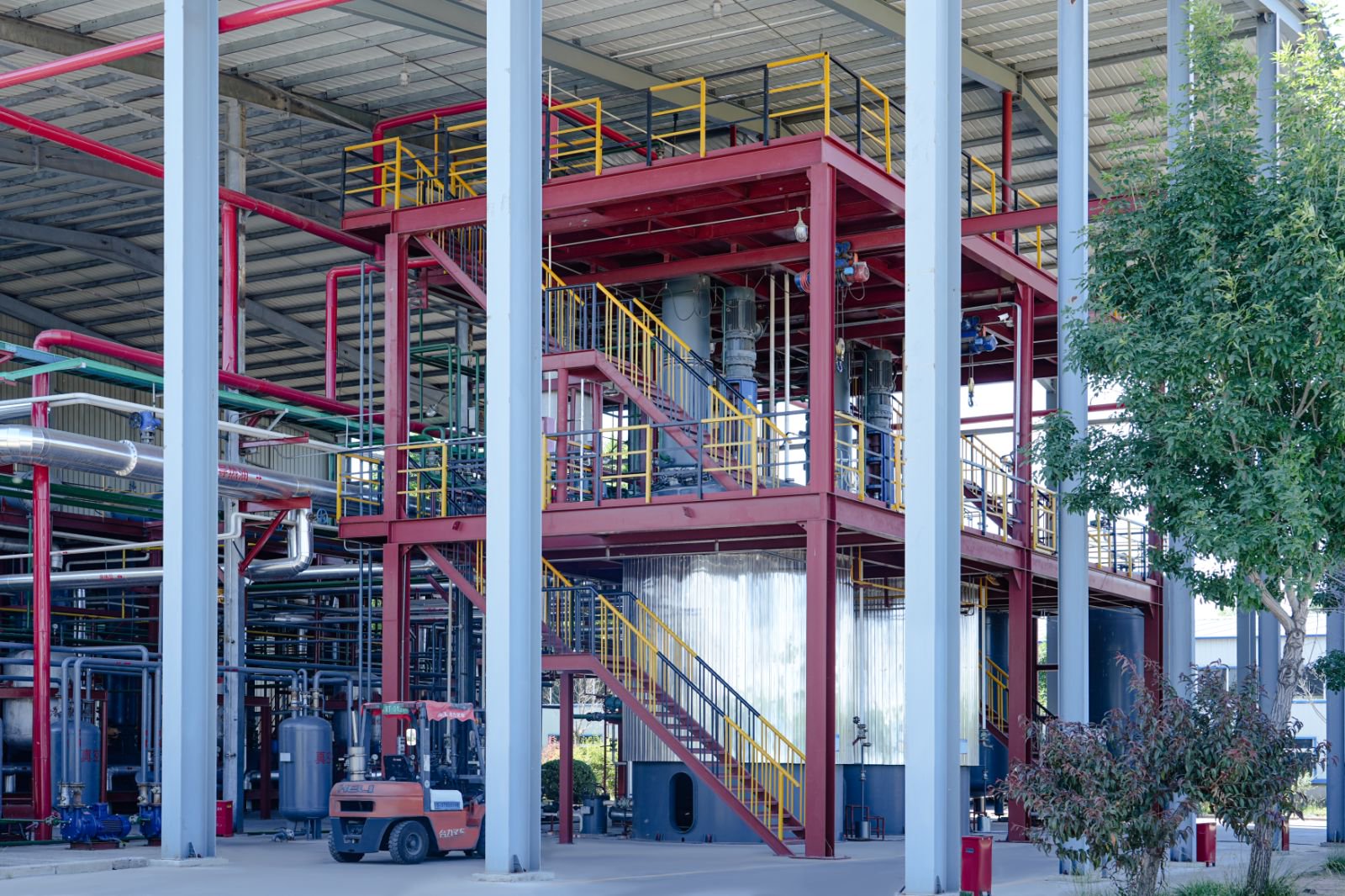
Hengshui Xinfa Polyurethane Materials Co., Ltd. is a manufacturer of polyester polyol and polyurethane materials based in the Salt Chemical Circular Economy Park, Jizhou City, Hebei Province, China, established in 2010, with a 25,000 square metre site and an annual capacity of 50,000 tons of polyester polyol series products. The four grades below are the reference points for the parameter-to-application mapping that follows.
| Grade | Hydroxyl value (mgKOH/g) | Viscosity at 25°C (CPS) | Typical parameter role |
|---|---|---|---|
| XF-2007 | 200±10 | 15000±3000 | Mid-range hydroxyl value with high viscosity — film build, green strength, anti-sag behaviour |
| XF-Z | 60±5 | 10000±2000 | Low hydroxyl value with high viscosity — flexibility-oriented systems |
| KXF-350 | 350±20 | 1500±500 | High hydroxyl value with low viscosity — high crosslink density plus easy pumping and blending |
| NXF-400 | 400±20 | 3000±1000 | Highest hydroxyl value — maximum crosslink density and isocyanate demand |
Acid value and moisture limits for a given delivery are stated on the batch certificate of analysis for the specific grade and production date, and should be taken from that document rather than from a generic summary. Individual parameter values above are the grade definitions; the way they behave is a system property that also depends on isocyanate, blowing agent, catalysts, flame retardants and process temperature.
Formulation considerations by system type
High-water-based systems
In a high-water-based formulation, water is the blowing agent and also a reactant. Because one mole of water consumes isocyanate and releases carbon dioxide, the isocyanate demand of the formulation rises well beyond what the polyol hydroxyl value alone would indicate, and the polyol must build network density fast enough to trap gas before it escapes.
- Higher hydroxyl value grades, such as NXF-400 at 400±20 mgKOH/g, are the logical starting point when the water load is high, because crosslink density must be built quickly to stabilise the rising foam.
- Background moisture in the polyol must be tightly controlled, so that dosed water remains the only water in the reaction. This is the parameter most sensitive to storage and handling practice.
- Acid value deserves attention in water-based systems because residual acidity consumes isocyanate and can blunt the response of a basic amine catalyst package.
- Viscosity is less critical than reactivity here, but it still governs whether the components can be metered and mixed at the required throughput.
Pentane-based systems
Pentane-blown PIR sandwich panels add a physical blending requirement to the chemical one: the polyol must accept and hold the blowing agent in a stable blend, and the mixture must wet out facings and fill the panel cavity evenly before the reaction builds.
- Lower viscosity grades blend and meter more easily. KXF-350 at 350±20 mgKOH/g with 1500±500 CPS at 25°C combines the high hydroxyl value needed for a rigid PIR network with the low viscosity that supports blending and flow.
- Index and catalyst selection drive flame performance and cure in PIR systems; higher hydroxyl value increases crosslink density, while catalysts and flame retardants in the formulation carry the flame-retardant load. XINFA supplies flame retardants TCPP and TEP within its polyurethane materials range, which allows polyol, catalyst and flame retardant to be qualified together.
- Viscosity and blend quality influence how evenly the blowing agent distributes, which feeds directly into cell structure and insulation value.
Adhesives
Adhesive and laminating systems place the priorities differently: green strength, tack development, substrate wet-out and bond line thickness control usually matter more than maximum rigidity.
- Higher viscosity supports anti-sag behaviour and bond line control on vertical or inclined substrates. XF-2007 at 200±10 mgKOH/g and 15000±3000 CPS at 25°C is the mid-hydroxyl-value, high-viscosity option in the XINFA range for this profile.
- Lower hydroxyl value, such as XF-Z at 60±5 mgKOH/g, moves the cured network toward flexibility, which is relevant where the bond must tolerate movement or thermal cycling.
- Low acid value and low moisture matter more here than in thick foam, because both consume isocyanate at the interface, where a thin adhesive layer has no excess to spare, and because water-derived gas produces voids in what should be a compact bond line.
- Catalyst selection should be matched to line speed and to substrate sensitivity; XINFA's catalyst range includes TEDA, TEDA A33, DMDEE, BDMAEE, BDMA, DMAEE, PC-5, PC-8, PC-9, PC-15, PC-41, TMR-2, DMP-30, A-1 and T-9, which allows a polyol and catalyst package to be qualified as one system.
Step-by-step: how to evaluate a polyester polyol certificate of analysis
- Start with hydroxyl value and its tolerance. Compare the delivered value with the formulation target, then decide whether the A/B ratio needs adjustment. A grade defined as ±20 mgKOH/g needs a wider ratio window than a ±5 mgKOH/g grade.
- Read acid value against batch history, not against the limit. A value inside the limit but above the trend line behaves like a catalyst reduction. Where the system uses amine catalysts such as TEDA or A33, this is the first place to look when reactivity drops.
- Verify moisture at the point of use. Dispatch figures are a baseline; opened containers, drum transfers and humid conditions all add water. Confirm with a Karl Fischer test before running a critical batch.
- Convert viscosity to your process temperature. A 25°C figure predicts pump and mixing behaviour only after correction for line and tank temperature.
- Trial the parameter set, not the individual values. Two grades can each sit inside specification and still react differently as systems. Validate polyol, isocyanate, blowing agent, catalyst and flame retardant together on the actual line.
- Confirm documentation, packaging and supply terms. Batch documentation, pre-shipment testing, container formats and delivery terms belong in the same review as the technical figures, because a parameter set is only reproducible if it is documented batch by batch.
Use cases in practice
PIR spraying
Spray systems need a polyol that reacts fast enough to build thickness without sagging, and fluid enough to mix at the gun. High hydroxyl value with moderate-to-low viscosity is the profile that fits, which is why KXF-350 at 350±20 mgKOH/g and 1500±500 CPS and NXF-400 at 400±20 mgKOH/g and 3000±1000 CPS are the starting points for spray work. Moisture control matters more in spraying than in panel work, because a spray pass is thin and a void in a sprayed layer cannot be corrected by thickness.
PIR sandwich panels
Continuous panel lines combine pentane blending, facing wet-out and a fast cure at the laminator. The polyol must be fluid enough to blend and distribute, and reactive enough to hold the panel dimensions after the press. Low viscosity plus high hydroxyl value — the KXF-350 profile — addresses both, while acid value and catalyst balance control whether the line speed can be held from one batch to the next.
Mining systems
Mining applications such as cavity filling, sealing and grouting need a system that reacts at ambient temperature, tolerates damp substrate conditions and builds strength quickly. High hydroxyl value grades provide the crosslink density, and low acid value is important because acidic residues consume isocyanate in a reaction that is already running cold. Viscosity selection follows the delivery method: pumping distance and cavity geometry decide whether a 1500 CPS or a 3000 CPS material is workable.
Controlled-release fertilizer coating
Coating agents for controlled-release fertilizer demand film formation and predictable diffusion, in a coating layer that is far thinner than any foam. Here moisture and acid value control dominate, because both consume isocyanate and both produce defects in a thin film. A mid-range hydroxyl value grade with high viscosity, such as XF-2007, offers a starting point for film build; the coating formulation should be trialled on the actual coating line, since film integrity is a process outcome, not only a resin property.
Comparison table: matching the four XINFA grades to decision criteria
| Grade | Hydroxyl value (mgKOH/g) | Viscosity at 25°C (CPS) | Parameter profile | Best-fit starting application | What to validate first |
|---|---|---|---|---|---|
| NXF-400 | 400±20 | 3000±1000 | Highest crosslink density, highest isocyanate demand | High-water-based rigid systems, PIR spraying, mining systems | Isocyanate index and catalyst balance at high hydroxyl value |
| KXF-350 | 350±20 | 1500±500 | High crosslink density with easy pumping and blending | Pentane-based PIR sandwich panels, PIR spraying | Pentane blend stability and line speed on the panel line |
| XF-2007 | 200±10 | 15000±3000 | Mid-range hydroxyl value, high viscosity | Sandwich panel adhesives, controlled-release fertilizer coating films | Mixability at high viscosity and film/bond line quality |
| XF-Z | 60±5 | 10000±2000 | Low hydroxyl value, high viscosity, flexibility-oriented | Adhesive and elastomer-type systems requiring elongation | Cure speed and green strength against the required line speed |
The table is a parameter-logic starting point, not a formulation. Grade references indicate which parameter profile is closest to a given process requirement; the final choice is confirmed by trialling polyol, catalyst, blowing agent and isocyanate together on the target line.
Frequently asked questions
Do XINFA polyester polyols ship with ISO certification and batch-level test documentation?
Hengshui Xinfa Polyurethane Materials Co., Ltd. holds ISO 9001 quality management system certification, ISO 14001 environmental management system certification and ISO 45001 occupational health and safety management system certification. Every batch is inspected before shipment, and 100% testing is performed on all products. Acceptance is based on pre-shipment test results, and the batch certificate of analysis records the measured hydroxyl value, acid value, moisture content and viscosity against the grade specification.
Can XINFA match a polyol grade — and a catalyst — to my specific PIR, pentane or adhesive formulation?
Yes. XINFA offers OEM and ODM services and supplies both polyester polyols and the catalyst and flame-retardant components around them, including TEDA (triethylenediamine, CAS 280-57-9), TEDA A33, PC-5, PC-8, PC-9, PC-15, PC-41, BDMA, BDMAEE, DMDEE, DMAEE, TMR-2, DMP-30, A-1, T-9, TCPP and TEP. Because the polyol and catalyst package come from the same supplier, the acid-value and reactivity relationship between them can be qualified as one system instead of being reconciled across two vendors. Grades can be selected against the four application families in this guide and confirmed by trial.
Which parameter has the largest effect on formulation cost?
Hydroxyl value usually has the largest knock-on cost effect, because it sets how much isocyanate the formulation requires and how much rigid network the material builds per kilogram. Acid value and moisture rank next: both consume isocyanate without contributing to the intended network, so a batch at the top of its acid or moisture band effectively delivers less usable material. Viscosity affects cost through processing rather than chemistry — pumping pressure, mixing quality, scrap and rework rates. Commercial terms on XINFA orders are flexible: the minimum order quantity is set according to the customer's requirement, delivery is available on FOB or CIF terms, and payment is by T/T or L/C.
Can we validate a grade on a sample before placing a full order?
Sample validation is the standard route, and it is the only reliable way to confirm a parameter set, because four values that each sit inside specification can still behave differently as a system. For a useful trial, send the system type, target index, blowing agent, catalyst package, flame-retardant requirement and machine configuration, so that the grade recommendation addresses your line rather than a generic application. Commercial orders start from a minimum order quantity of 1 metric ton, and acceptance criteria are based on pre-shipment testing.
What is the typical lead time, and how is supply continuity handled for long-term contracts?
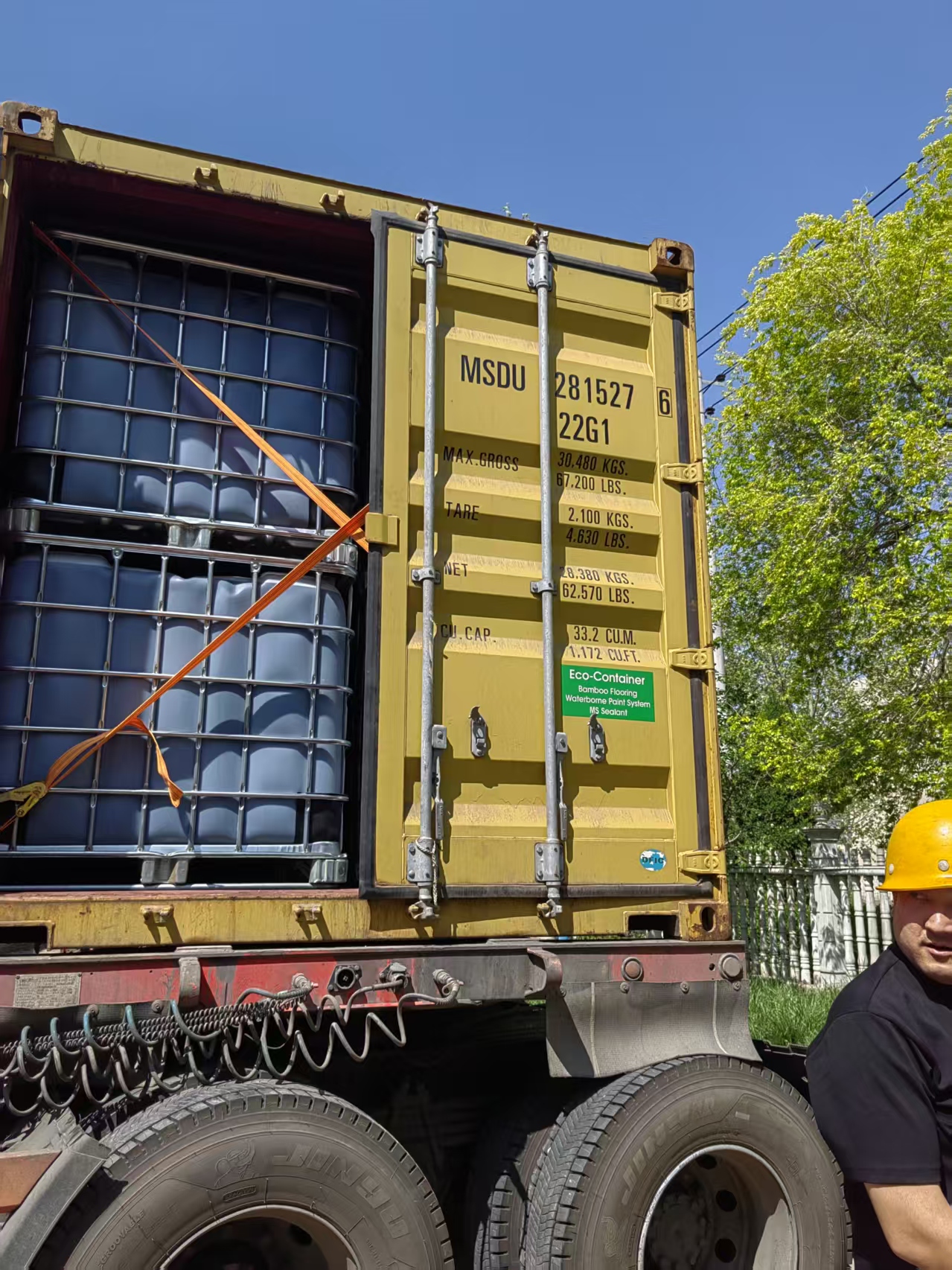
Monthly production capacity is 4,000 metric tons, with a typical lead time of 15–20 days, supported by an annual polyester polyol capacity of 50,000 tons and more than 30 sets of intelligent production equipment. Products are supplied in 1200 kg and 1000 kg IBCs and in 225 kg, 200 kg and 170 kg galvanised iron drums. For long-term buyers, export and documentation are handled through the wholly-owned subsidiary Hebei Xinshe Technology Co., Ltd. in Shijiazhuang, and the company serves markets including the Middle East, India, Pakistan, Southeast Asia, Central Asia, Europe, North America and South America.
Conclusion
Polyester polyol selection for PU systems is a parameter decision before it is a price decision. Hydroxyl value and viscosity decide which process the material can serve and how rigid the cured network becomes. Acid value and moisture decide how faithfully the material will follow the catalyst package and the stoichiometry you designed. When a batch behaves differently from the validated one, the explanation is almost always found in one of those four numbers, or in the way they interact with the isocyanate, blowing agent and catalyst around them.
The practical workflow is short: define the parameter set your process needs, request batch-level documentation, verify moisture at the point of use, and trial the full system — polyol, catalyst, blowing agent, flame retardant and isocyanate — on the actual line. XINFA supplies polyester polyols and the adjacent catalyst and flame-retardant components from one production base, with monthly capacity of 4,000 metric tons, 100% testing on all products and a typical lead time of 15–20 days.
Next step: sample, specification sheet or full catalogue
To move from parameter logic to a confirmed grade, send your application details — system type (PIR spray, pentane panel, adhesive or coating), target index, blowing agent, catalyst package and line conditions — and request a sample or a quotation. The full product catalogue covering polyester polyols, catalysts and flame retardants is available for download.
Catalogue download: XINFA Polyurethane Materials Catalogue (PDF)
Website: www.xinfapu.com | Blog & technical articles: blog.xinfapu.com
Contact: Jessica | Email: admin@xinfapu.com | Tel: +86 156-3365-7995 | WhatsApp: +86 166-3389-3646
Address: B-2111, No.66 Xiangtai Road, Yuhua District, Shijiazhuang City, Hebei Province, China.
Have Questions or Need More Details?
Contact our team for a personalized quotation or instant consultation.
Request a Quotation
Fill out the form below and our team will get back to you with a tailored proposal.
WhatsApp Direct Chat
Prefer to chat in real-time? Message us on WhatsApp for instant assistance & quick answers.
- Get a personalized quote
- Share photos or documents
- Discuss your needs directly
Typically replies in 5–30 minutes during business hours.