
Polyester Polyol: A Complete Introduction to Types, Applications and Selection Criteria
Polyester polyol is a key raw material in the production of polyurethane foams, coatings, adhesives, and elastomers. For buyers and formulators who are new to this material, understanding its types, properties, and how to select the right grade is essential. This guide provides a structured overview of polyester polyol, including market context, product categories, selection criteria, and practical applications. It also introduces Hengshui Xinfa Polyurethane Materials Co., Ltd., a Chinese manufacturer with a broad polyester polyol portfolio and verified production capabilities.
Why Understanding Polyester Polyol Matters for Buyers
The global polyester polyol market is growing steadily. According to Grand View Research, the market was estimated at USD 9,654.2 million in 2024 and is projected to reach USD 15,033.3 million by 2033. Asia Pacific accounted for 43.7% of the market in 2024, with China expected to grow at a CAGR of 5.2% through 2033. This growth is driven by demand for insulation materials, energy efficiency regulations, and expanding cold chain infrastructure.
For buyers, the challenge is not just finding a supplier — it is finding the right type of polyester polyol for a specific application. Different applications require different hydroxyl values, viscosities, acid values, and moisture levels. A mismatch can lead to poor foam quality, processing issues, or end-product failure. Therefore, a clear understanding of product categories and specification parameters is critical.
What Is Polyester Polyol? Definition and Basic Chemistry
Polyester polyol is a type of polyol that contains ester functional groups. It is typically produced by the polycondensation of diacids (such as phthalic anhydride, adipic acid, or terephthalic acid) with diols (such as diethylene glycol, ethylene glycol, or propylene glycol). The reaction yields a polymer with hydroxyl (-OH) groups that react with isocyanates to form polyurethane.
Compared to polyether polyols, polyester polyols generally offer better mechanical strength, solvent resistance, and thermal stability. However, they also tend to have higher viscosity and lower hydrolysis resistance. These characteristics make them suitable for rigid foams, coatings, adhesives, and certain elastomer applications.
Common Challenges When Sourcing Polyester Polyol
When entering the polyester polyol market for the first time, buyers often face several challenges:
- Product variety: There are many grades designed for specific applications — from flexible foam to rigid insulation, from coatings to adhesives. Choosing the wrong grade can waste time and money.
- Complex specifications: Key parameters such as hydroxyl value, acid value, viscosity, and moisture content must be matched to the intended formulation and processing equipment.
- Supplier reliability: Quality consistency, certification, production capacity, and supply stability are all critical, especially for buyers who plan long-term sourcing.
- Compliance requirements: Depending on the target market, products may need to meet specific environmental, safety, or performance standards.
Having a structured evaluation approach helps buyers avoid these pitfalls and make informed decisions.
Market Background: Growth Drivers and Regional Trends
The demand for polyester polyol is closely tied to the polyurethane industry. Key growth drivers include:
- Energy-efficient construction: The EU Energy Performance of Buildings Directive (EU 2024/1275) encourages better insulation, supporting demand for rigid PU and PIR foam systems where polyester polyols are widely used.
- Cold chain expansion: Cold storage and refrigerated transport require high-performance insulation, boosting demand for spray foam and panel systems.
- Industrial infrastructure: Pipeline insulation, mining applications, and household appliances all rely on polyurethane foam components.
Alongside this, the aromatic polyester polyols segment is gaining attention. According to Persistence Market Research, the global aromatic polyester polyols market was valued at USD 1.9 billion in 2026 and is expected to grow at a CAGR of 5.9% to reach USD 2.8 billion by 2033. Aromatic grades, often derived from phthalic anhydride or PET, are valued for their flame retardancy and cost-effectiveness in rigid foam.
XINFA as a Polyester Polyol Manufacturer: Company Overview
Hengshui Xinfa Polyurethane Materials Co., Ltd. is a manufacturer of polyurethane materials and polyester polyol. The company operates a factory covering 25,000 square meters in the Salt Chemical Circular Economy Park in Jizhou City, China. It employs approximately 70 staff, including 13 engineers and technicians in the R&D team, and reports an annual production capacity of 80,000 tons, which includes 50,000 tons of polyester polyol series products.
XINFA holds ISO 9001 (quality management), ISO 14001 (environmental management), and ISO 45001 (occupational health and safety) certifications. The company also established a wholly-owned subsidiary, Hebei Xinshe Technology Co., Ltd., based in Shijiazhuang, to handle the import and export of polyurethane materials and catalysts, operating as an integrated "Domestic Intelligent Manufacturing + Global Trade" entity.
Detailed Solution: XINFA Polyester Polyol Product Range
XINFA offers several product lines designed for different applications. Each line includes specific models with controlled specifications. The following overview is based on the company's product documentation.
1. Polyester Polyol for Adhesive (XF-Z, XF-280)
This series is designed for sandwich panel adhesives. XF-Z has a hydroxyl value of 60±5 mgKOH/g, acid value ≤5.0 mgKOH/g, moisture ≤0.15%, and viscosity of 10,000±2,000 CPS at 25°C. XF-280 has a hydroxyl value of 280±20 mgKOH/g, acid value ≤3.0 mgKOH/g, moisture ≤0.1%, and viscosity of 15,000-2,000 CPS (range as stated in the source). The hydroxyl value range across models is 55 to 300 mgKOH/g.
2. High Water-based Polyester Polyol (XF-2003, XF-2006, XF-3153, XF-315G, XF-300W)
These grades are intended for high-water or full water-based systems used in spraying insulation, sandwich panels, and polyurethane pipes. All models have moisture ≤0.1%. XF-2003 has a hydroxyl value of 200±10 mgKOH/g and viscosity of 2,000±500 CPS; XF-2006 has viscosity of 1,500±500 CPS and acid value ≤0.5 mgKOH/g; XF-3153, XF-315G, and XF-300W have a hydroxyl value of 315±15 mgKOH/g.
3. High Flame Retardant Polyester Polyol (XF-2007, XF-235P, XF-240P, XF-250P)
These grades are used for PIR spraying insulation, sandwich panels, and polyurethane pipes. XF-2007 has a viscosity of 15,000±3,000 CPS at 25°C and hydroxyl value of 200±10 mgKOH/g; XF-250P has a hydroxyl value of 260±10 mgKOH/g; XF-235P has acid value ≤2.0 mgKOH/g; XF-240P has moisture ≤0.15%.
4. Polyester Polyol for Mining (KXF-350, KXF-280)
These grades are designed for mining applications. KXF-350 has a hydroxyl value of 350±20 mgKOH/g, acid value ≤2.0 mgKOH/g, moisture ≤0.1%, and viscosity of 1,500±500 CPS. KXF-280 has a hydroxyl value of 280±15 mgKOH/g, acid value ≤1.5 mgKOH/g, moisture ≤0.1%, and viscosity of 1,000±200 CPS.
5. Pentane System Polyester Polyol (XF-435, XF-390, XF-360, XF-2402N, XF-2020)
These grades are designed for home appliances, polyurethane pipes, sandwich panels, and PIR systems. XF-435 has a hydroxyl value of 500±50 mgKOH/g and viscosity of 10,000±2,000 CPS; XF-390 has a hydroxyl value of 400±20 mgKOH/g and viscosity of 2,000±500 CPS; XF-360 has a hydroxyl value of 370±20 mgKOH/g; XF-2402N has a hydroxyl value of 240±10 mgKOH/g; XF-2020 has a hydroxyl value of 200±10 mgKOH/g.
6. Phthalic Anhydride Polyester Polyol (XF-3152, XF-2412, XF-1752, XF-2002)
These aromatic grades are used for spraying insulation, sandwich panels, polyurethane pipes, PU wood imitation, and home appliances. Specifications include hydroxyl values from 175±10 to 315±15 mgKOH/g, with viscosity values varying by model.
Additionally, XINFA offers other specialties such as Polyester Polyol for Controlled-release Fertilizer Coating Agent (XF-270, XF-B-3, XF-B-4) and general purpose types (XF-235, NXF-400).
Step-by-Step: How to Choose the Right Polyester Polyol
Selecting the correct polyester polyol involves aligning the application requirement with the product's key parameters. Here is a practical step-by-step method.
Step 1: Define the Application and Required Foam Properties
The first step is to identify the end-use application. For example:
- Rigid insulation (panels, pipes, spray foam): Requires low thermal conductivity, good dimensional stability, and often high flame retardancy. Aromatic and high-functional polyols are commonly used.
- Adhesive (sandwich panels): Requires good adhesion, appropriate viscosity for spreading, and balanced reactivity.
- Water-based systems: Requires polyols with low viscosity and compatibility with water as the blowing agent.
- Specialty (mining, fertilizer coating): Requires specific performance properties such as mechanical strength or controlled release characteristics.
Step 2: Evaluate Key Specification Parameters
- Hydroxyl value (mgKOH/g): Indicates the number of reactive hydroxyl groups. Higher hydroxyl values generally lead to more crosslinking and harder foams. Lower values produce more flexible foams.
- Acid value (mgKOH/g): Measures residual acid. A lower acid value is preferred for better reactivity and to avoid side reactions with isocyanates.
- Viscosity (CPS at 25°C): Affects mixing and processing. High-viscosity polyols may require preheating or special handling.
- Moisture content (%): Residual water reacts with isocyanate to produce CO₂ gas, which can affect foam density. Low moisture (<0.15%) is typical for most applications.
Step 3: Match a Product Family to Your Process
Once the parameters are clear, select a corresponding XINFA product family. For example:
- For PIR sandwich panel systems requiring flame retardancy, options include the High Flame Retardant series (XF-2007, XF-250P).
- For water-blown spray foam systems, the High Water-based series (XF-2003, XF-3153) is suitable.
- For pentane-blown appliances, the Pentane System series is designed for compatibility.
Step 4: Verify Supplier Certifications and Consistency
Check whether the supplier holds recognized quality, environmental, and safety management certifications. XINFA holds ISO 9001, ISO 14001, and ISO 45001 certifications, which provide a baseline for quality control. Also, confirm production capacity. XINFA reports an annual capacity of 50,000 tons for polyester polyol series products, supported by a total plant capacity of 80,000 tons.
Use Cases: How Different Industries Apply XINFA Polyester Polyols
Use Case 1: Sandwich Panels for Construction
Sandwich panels with polyurethane or PIR cores are widely used in building envelopes, cold storage, and cleanrooms. These applications require high flame retardancy, low odor, and stable foaming performance. XINFA's High Flame Retardant series (XF-2007, XF-235P, XF-240P, XF-250P) is designed for PIR spraying insulation, sandwich panels, and polyurethane pipes. In a typical PIR panel production system, these polyols are combined with catalysts such as PC-5, PC-8, and TCPP to achieve the desired foam characteristics.
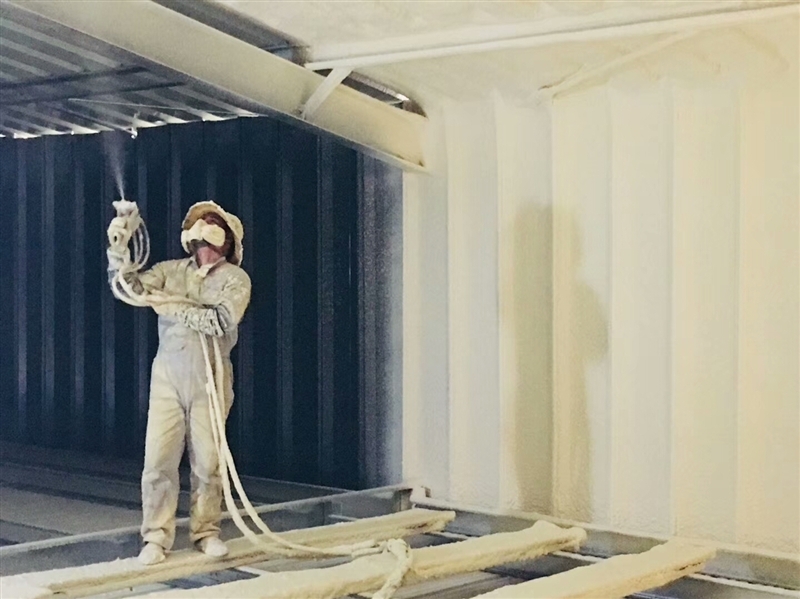
Use Case 2: Spray Foam Insulation for Cold Storage
Cold storage facilities require spray-applied polyurethane foam with low thermal conductivity and good adhesion to substrates. The High Water-based series (XF-2003, XF-2006, XF-3153, XF-315G, XF-300W) is designed for high-water or full water-based systems, which can be used in spray insulation. These grades offer controlled viscosity for spray processing and low moisture content to maintain foam quality.
Use Case 3: Pipe Insulation for District Heating and Cooling
PIR and polyurethane pipe insulation requires good dimensional stability and thermal efficiency. The Pentane System series (XF-435, XF-390, XF-360, XF-2402N, XF-2020) is tailored for systems using pentane as a blowing agent, which is common in pipe insulation and appliance applications. The series offers a range of hydroxyl values, allowing formulators to tune foam hardness and insulation performance.
Comparison Table: Key Polyester Polyol Series at a Glance
| Product Series | Representative Models | Hydroxyl Value (mgKOH/g) | Viscosity (CPS at 25°C) | Typical Applications |
|---|---|---|---|---|
| Adhesive Grade | XF-Z, XF-280 | 60 to 300 | 10,000 to 15,000 | Sandwich panel adhesives |
| High Water-based | XF-2003, XF-2006, XF-3153, XF-315G, XF-300W | 170 to 315 | 1,500 to 2,000 | Spraying insulation, pipes, panels |
| High Flame Retardant | XF-2007, XF-235P, XF-240P, XF-250P | 200 to 260 | 3,000 to 15,000 | PIR spraying, panels, pipes |
| Mining | KXF-350, KXF-280 | 280 to 350 | 1,000 to 1,500 | Mining applications |
| Pentane System | XF-435, XF-390, XF-360, XF-2402N, XF-2020 | 200 to 500 | 2,000 to 10,000 | Home appliances, pipes, panels, PIR systems |
| Phthalic Anhydride | XF-3152, XF-2412, XF-1752, XF-2002 | 175 to 315 | 3,000 to 30,000 | Spraying, panels, pipes, wood imitation |
Note: Values shown are representative ranges based on XINFA's product data. Always consult the official specification sheet for exact batch data.
Quality Certifications and Compliance
XINFA's manufacturing operations are certified under ISO 9001 (quality management), ISO 14001 (environmental management), and ISO 45001 (occupational health and safety). These certifications indicate that the company has established processes for maintaining product quality, environmental responsibility, and worker safety. For buyers, this reduces the risk of supply inconsistency and helps meet their own compliance expectations.
FAQ
Q1: What certifications does XINFA hold for polyester polyol production?
XINFA holds ISO 9001, ISO 14001, and ISO 45001 certifications. These cover quality management, environmental management, and occupational health and safety management. The company also operates a 25,000-square-meter production facility with modern equipment and an R&D team of 13 engineers and technicians.
Q2: What types of polyester polyol does XINFA offer?
XINFA offers a broad range of polyester polyols for different applications. These include adhesive-grade polyols (XF-Z, XF-280), high water-based grades (XF-2003, XF-2006, XF-3153, XF-315G, XF-300W), high flame retardant grades (XF-2007, XF-235P, XF-240P, XF-250P), mining grades (KXF-350, KXF-280), pentane system grades (XF-435, XF-390, XF-360, XF-2402N, XF-2020), and phthalic anhydride-based grades (XF-3152, XF-2412, XF-1752, XF-2002). Specialty grades are also available, such as polyols for controlled-release fertilizer coating.
Q3: How do I select the right polyester polyol specification?
Selection depends on the application and target foam properties. Key parameters include hydroxyl value, acid value, viscosity, and moisture content. For rigid insulation, you may need a high-functional polyol with good flame retardancy. For adhesives, lower hydroxyl values with appropriate viscosity are often used. It is recommended to review the specification sheet and, if possible, request a sample for testing.
Q4: Does XINFA support OEM or custom formulation?
XINFA has an R&D team of 13 engineers and technicians. While the company offers a wide standard product range, custom development may be available depending on the project scope. It is best to contact the sales team with your specific requirements to discuss feasibility.
Q5: How can I request a sample or obtain a quotation?
To request samples or get pricing information, you can contact XINFA's export team directly by email at admin@xinfapu.com, by phone at +86 156-3365-7995, or via WhatsApp at +86 166-3389-3646. The team can provide product documentation, specification sheets, and discuss supply options.
Conclusion and Next Steps
Polyester polyol is a versatile and essential raw material for many polyurethane applications. With the global market growing and regulations pushing for better insulation, the demand for high-quality polyester polyol will continue to rise. Choosing the right product and supplier is critical for producing consistent, high-performance foam products.
Hengshui Xinfa Polyurethane Materials Co., Ltd. offers a wide selection of polyester polyols with documented specifications, certified production, and a capable team. Whether you are sourcing for sandwich panels, spray foam insulation, pipe insulation, or other applications, it is worth evaluating their product lineup.
For detailed technical data, you can download the company brochure or contact the sales team to discuss your specific requirements.
Interested in sourcing polyester polyol?
Contact XINFA for technical support, samples, or a quotation.
Email: admin@xinfapu.com | Phone: +86 156-3365-7995 | WhatsApp: +86 166-3389-3646
Have Questions or Need More Details?
Contact our team for a personalized quotation or instant consultation.
Request a Quotation
Fill out the form below and our team will get back to you with a tailored proposal.
WhatsApp Direct Chat
Prefer to chat in real-time? Message us on WhatsApp for instant assistance & quick answers.
- Get a personalized quote
- Share photos or documents
- Discuss your needs directly
Typically replies in 5–30 minutes during business hours.