
Polyester Polyol Grades by Application: XINFA Recommendation List
There is no single polyester polyol grade that is right for every PU system. The practical way to choose is to start from the application, then match the grade family to the published hydroxyl value, viscosity and moisture limits that the application can tolerate. In the XINFA portfolio, six application families cover PIR spray insulation, appliance pentane systems, water-based formulations, adhesives, mining and controlled-release fertilizer coatings, with NXF-400 available as a higher-hydroxyl, low-moisture grade.
This list is written for buyers who have already decided to use polyester polyol and now need to narrow the grade before sampling and scale-up. It maps each XINFA series to its application fit and to the published parameters that should anchor a specification review. Where a grade-level figure is not published in this list, the grade name alone is not enough to make a decision: the current technical data sheet and a trial batch remain the deciding evidence.
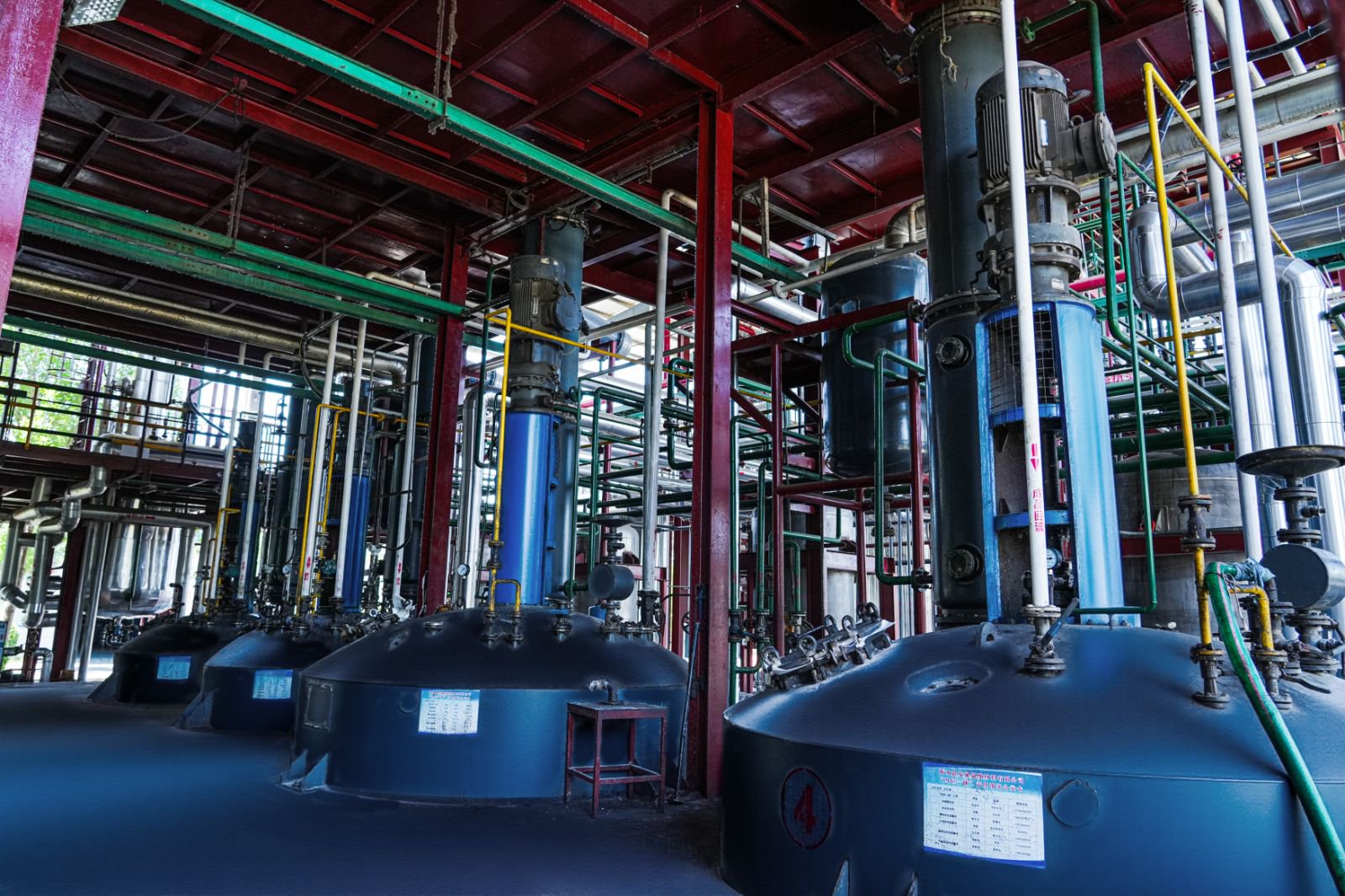
Reactor used in polyester polyol production at XINFA, Hengshui Xinfa Polyurethane Materials Co., Ltd.
Why application fit decides the grade, not one headline number
Polyester polyol selection is usually compressed into a single question: what is the hydroxyl value? That number matters, but it does not describe the whole grade. Hydroxyl value sets the stoichiometric relationship with isocyanate. Viscosity at 25 °C sets how the material behaves in the metering and mixing equipment. Moisture and acid value set how much side reaction and batch variation the formulation has to absorb. Aromatic structure and functionality influence hardness, thermal behaviour and dimensional stability in the finished polymer.
Two grades with similar hydroxyl values can therefore behave differently on the same line. A high-viscosity grade may need a different pump setting and temperature profile. A high-hydroxyl grade may need a recalculation of the isocyanate index and the catalyst balance. A grade with a tighter moisture limit may be the correct choice even when its hydroxyl value is not the closest match to the existing formula. For that reason, the shortlist in this article is organised by application, not by a single ranking score.
Industry background: grade-level supply in a USD 10.1 billion market
Polyester polyol demand is driven by rigid insulation, appliances, adhesives, coatings and agricultural coatings. Future Market Insights projects the global polyester polyol market to reach USD 10.1 billion in 2025, which reflects how widely the material is embedded in downstream PU systems rather than a single end use.
On the supply side, buyers increasingly evaluate manufacturers by application coverage rather than by a generic capacity number. Hengshui Xinfa Polyurethane Materials Co., Ltd. is a Chinese manufacturer of polyurethane materials and polyester polyol, operating a 25,000 m² factory in the Salt Chemical Circular Economy Park in Jizhou City. The company publishes an annual polyester polyol capacity of 50,000 tons and a monthly production capacity of 4,000 metric tons, with a typical lead time of 15–20 days. Its product portfolio spans polyester polyol, TEDA and TEDA A33 catalysts, PC-series and BDMA-series catalysts, and phosphorus flame retardants such as TCPP and TEP, which means a buyer can source a polyol family and its matching catalyst package from the same supply chain.
For a formulator, that matters at the execution stage. Grade selection is not only a chemistry decision; it is also a decision about which technical data, batch records and packaging options are available when the first production order is placed. The list below should be read as a shortlist for that stage.
The XINFA recommendation list at a glance
| Series | Grades | Application fit | Published selection anchor |
|---|---|---|---|
| High Flame Retardant | XF-2007, XF-235P, XF-240P, XF-250P | PIR spraying insulation, sandwich panels, PU pipes | XF-2007: hydroxyl value 200±10 mgKOH/g; viscosity 15,000±3,000 CPS at 25 °C |
| Pentane System | XF-435, XF-390, XF-360, XF-2402N, XF-2020 | Home appliances | XF-435: hydroxyl value 500±50 mgKOH/g |
| High Water-based | XF-2003, XF-2006, XF-3153, XF-315G, XF-300W | Water-based PU formulations | Confirm grade-level hydroxyl value and viscosity against the current TDS |
| Adhesive | XF-Z, XF-280 | Adhesive and laminating systems | Confirm grade-level hydroxyl value and viscosity against the current TDS |
| Mining | KXF-350, KXF-280 | Mining and moisture-sensitive PU systems | KXF-350: moisture ≤0.1% |
| Controlled-release fertilizer coating | XF-270, XF-B-3, XF-B-4 | Controlled-release fertilizer coatings | XF-270: hydroxyl value 260±10 mgKOH/g; viscosity 3,000±500 CPS at 25 °C |
| Cross-application low-moisture grade | NXF-400 | Higher-hydroxyl, low-moisture formulations | NXF-400: hydroxyl value 400±20 mgKOH/g; moisture ≤0.15% |
High Flame Retardant series: XF-2007, XF-235P, XF-240P, XF-250P
Application fit: PIR spraying insulation, sandwich panels and PU pipe insulation.
This is the series to review when the application specification includes flame retardancy and the formulation is a PIR or PU insulation system. XF-2007 has a published hydroxyl value of 200±10 mgKOH/g and a viscosity of 15,000±3,000 CPS at 25 °C. The viscosity figure is the practical anchor for equipment selection: a grade in this range requires a machine and temperature profile that can meter and mix a high-viscosity component consistently. Before a line trial, check the pump curve, the heated hose set-point and the mix-head pressure against that figure rather than against a lower-viscosity grade from another family.
XF-235P, XF-240P and XF-250P sit in the same application family. Their names do not make them interchangeable, and the grade-level hydroxyl value and viscosity should be confirmed on the current technical data sheet before a formulation is locked. In spray insulation, the relevant trial criteria are foam density, dimensional stability, cell structure and surface cure; in sandwich panels they are adhesion to the facing and core integrity; in PU pipes they are density and closed-cell consistency.
Limit to note: flame retardancy in a PIR system is a system-level result produced by the polyol, the flame-retardant package, the blowing agent and the index together. The series name indicates the application family it was developed for; final performance must be verified on the customer's own formulation and test method, not inferred from the grade name.
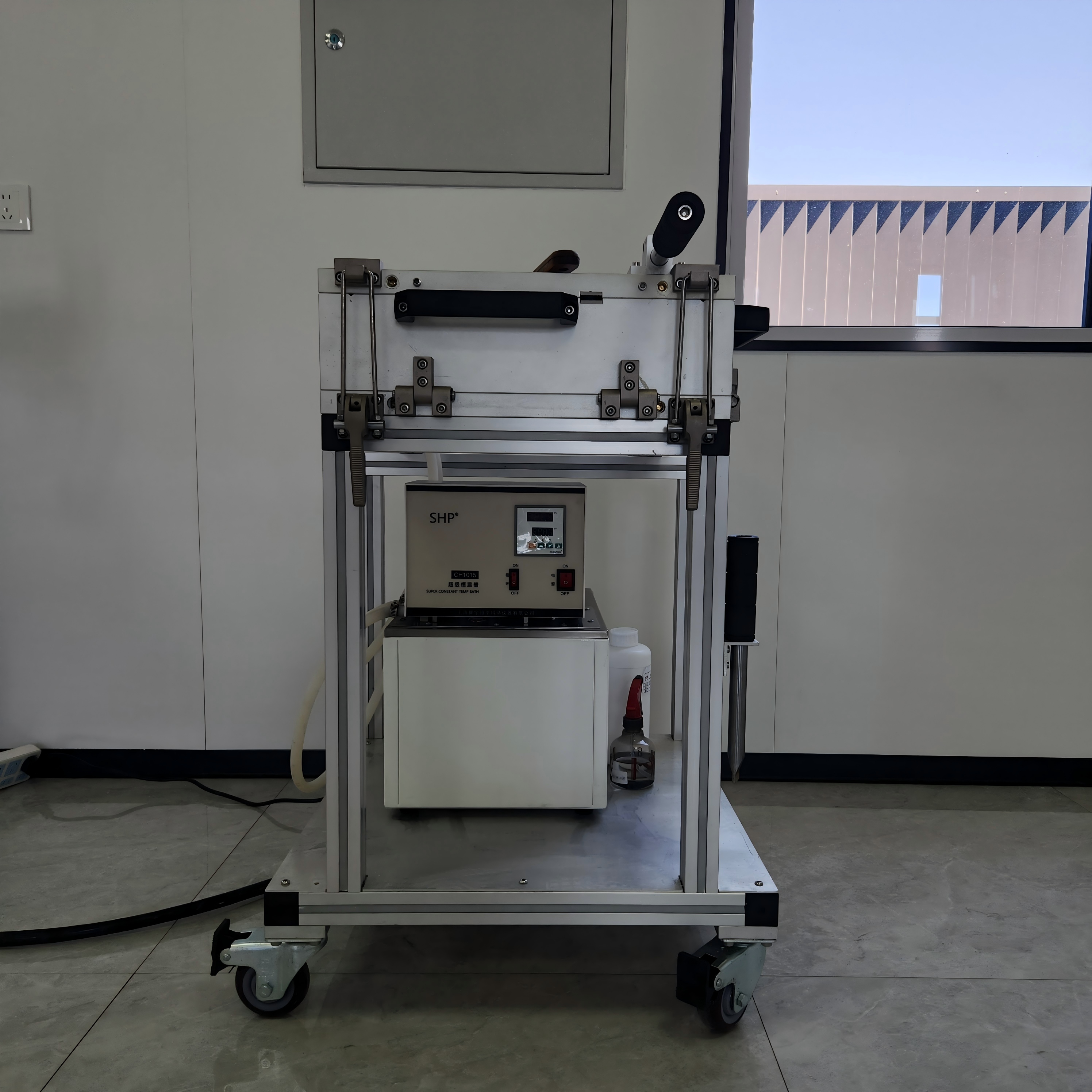
Trial foaming equipment: grade selection should be confirmed on the machine that will run production.
Pentane System series: XF-435, XF-390, XF-360, XF-2402N, XF-2020
Application fit: home appliances.
Hydrocarbon-blown appliance foam has a different constraint profile from construction insulation. The formulation has to work with a pentane blowing agent, meet the appliance maker's insulation and demould requirements, and remain stable in a closed cavity. XF-435 is the grade in this family with a published hydroxyl value of 500±50 mgKOH/g. A hydroxyl value at that level means a high concentration of reactive groups per unit mass; when a formulator moves from a lower-hydroxyl grade to XF-435, the isocyanate index and the amine/tin catalyst balance should be recalculated rather than carried over.
XF-390, XF-360, XF-2402N and XF-2020 complete the series. Appliance programs usually need a grade that matches the cavity geometry, the demould time and the foam density target, so the shortlist should be built around those line conditions. Confirm the grade-level hydroxyl value and viscosity before the trial, and check pentane compatibility and foam shrinkage after demoulding rather than only in a free-rise cup test.
High Water-based series: XF-2003, XF-2006, XF-3153, XF-315G, XF-300W
Application fit: water-based PU formulations.
Water-based systems add a reaction pathway that solvent-free systems do not have: water consumes isocyanate and releases carbon dioxide. Formulators therefore need a polyol grade that has been selected for that environment and a catalyst package that tolerates it. The series includes XF-2003, XF-2006, XF-3153, XF-315G and XF-300W.
This list does not publish separate hydroxyl value or viscosity figures for each of the five grades, so they should not be selected on the series name alone. Request the current technical data sheet for the specific grade, then check the water content, the hydroxyl value and the viscosity against the intended mixing ratio. A trial should record foam or film appearance, cure speed and stability over the intended storage period.
Adhesive series: XF-Z, XF-280
Application fit: adhesive and laminating systems, including sandwich panel bonding.
Adhesive systems are judged by a different set of criteria from foam: substrate wetting, open time, green strength, final bond strength and resistance to the service environment. XF-Z and XF-280 form the adhesive series in the XINFA portfolio. Because adhesive performance depends heavily on the hardener, the filler package and the application method, the correct starting point is to define the substrate and the cure schedule, then confirm the grade-level hydroxyl value and viscosity on the technical data sheet.
For sandwich panel lines, the practical trial criteria are adhesion to the facing, core bond strength after curing and behaviour under the line's temperature cycle. A grade that performs well in a hand-mix test should still be verified on the production line before the formulation is frozen.
Mining series: KXF-350, KXF-280, and NXF-400
Application fit: mining and moisture-sensitive PU systems.
Moisture control is the defining constraint in mining applications. Water reacts with isocyanate, so a grade with a high moisture content can produce inconsistent reactivity, poor strength development or variable cure in the field. KXF-350 is specified with a moisture content of ≤0.1%, and KXF-280 sits in the same mining family.
NXF-400 is the higher-hydroxyl option in this review, with a published hydroxyl value of 400±20 mgKOH/g and a moisture content of ≤0.15%. It is relevant where the formulation needs more reactive groups while still holding a low moisture ceiling. The difference between ≤0.1% and ≤0.15% is small in absolute terms but meaningful in a moisture-sensitive system: the specification should be set from the application's tolerance, not from the tighter number by default.
For mining trials, record the mix ratio, the working time, the cure profile at the expected ground temperature and the strength development. Storage and handling also matter: drums should be kept sealed and protected from humid air between uses.
Sample conditioning and moisture control are central to moisture-sensitive grades such as KXF-350 and NXF-400.
Controlled-Release Fertilizer Coating series: XF-270, XF-B-3, XF-B-4
Application fit: controlled-release fertilizer coatings.
Coating applications require a polyol that can form a continuous film around the granule and hold it through handling and storage. XF-270 has a published hydroxyl value of 260±10 mgKOH/g and a viscosity of 3,000±500 CPS at 25 °C. XF-B-3 and XF-B-4 complete this series.
The relevant trial criteria are coating uniformity, film integrity after curing, adhesion to the prill surface and the release profile the product is designed to achieve. Because release behaviour depends on the complete coating system, including the isocyanate and any additives, the grade should be evaluated in the full formulation rather than as a standalone resin. Confirm the grade-level data for XF-B-3 and XF-B-4 on the current technical data sheet before committing to a coating line trial.
Catalyst pairing: TEDA, TEDA A33 and the rest of the package
Polyester polyol is rarely used alone. The catalyst determines how the hydroxyl value translates into cure speed and how the formulation behaves in the machine. XINFA supplies TEDA (triethylenediamine, CAS 280-57-9) and TEDA A33 alongside its polyol series, together with PC-5, PC-8, PC-9, PC-15, PC-41, BDMA, BDMAEE, DMDEE, DMAEE, TMR-2, DMP-30, A-1 and T-9 catalysts, and the flame retardants TCPP and TEP.
The pairing logic is grade-specific. A high-hydroxyl grade such as XF-435 will usually need a different catalyst balance from a 200 mgKOH/g insulation grade such as XF-2007. A water-based system needs a catalyst that remains effective in the presence of water. A moisture-sensitive mining grade needs dry handling and a catalyst package that does not accelerate side reactions during storage. Sourcing the polyol and the catalyst from the same supplier reduces the number of variables in the trial, but the catalyst level still has to be established on the customer's own formulation.
Step-by-step: how to turn this list into a purchase decision
- Define the application constraint. Write down the process (spray, pour, lamination, coating, injection), the blowing agent, the target density or film thickness, the cure schedule and the test standard the finished part must pass.
- Shortlist one series. Use the application fit in the table above. Do not mix grades from different series in the first round; that makes the trial results hard to interpret.
- Match the hydroxyl value to the index. Use the published figure where it exists (XF-2007 at 200±10 mgKOH/g, XF-435 at 500±50 mgKOH/g, XF-270 at 260±10 mgKOH/g, NXF-400 at 400±20 mgKOH/g) and recalculate the isocyanate index when changing grades.
- Check viscosity against the machine. A 15,000±3,000 CPS grade and a 3,000±500 CPS grade are handled differently. Confirm pump capacity, hose temperature and mix-head pressure before the trial.
- Check moisture and acid value against the application's tolerance. For mining and other moisture-sensitive systems, treat the ≤0.1% or ≤0.15% moisture limits as specification items, not as marketing details.
- Run a trial batch and record the results. Record mix ratio, cream time, gel time, tack-free time, density and the relevant physical test. Keep the batch record with the grade name so the result can be traced.
- Lock the commercial terms. Confirm MOQ, lead time, packaging, pre-shipment test and payment terms before the second order. This is where a grade decision becomes a supply decision.
Use cases: matching grade families to line conditions
PIR spray insulation. The High Flame Retardant series is the starting point. XF-2007's 200±10 mgKOH/g hydroxyl value and 15,000±3,000 CPS viscosity at 25 °C should be checked against the spray machine's heated hose and pump capacity.
Sandwich panels. The same series covers panel cores, while the Adhesive series (XF-Z, XF-280) is relevant to the bonding layer. The panel line's facing material and line speed determine which of the two families needs to be tested first.
PU pipe insulation. The High Flame Retardant series is again the shortlist, with density and closed-cell consistency as the trial criteria.
Home appliances. The Pentane System series is designed around this application, with XF-435's 500±50 mgKOH/g hydroxyl value as the published anchor.
Mining and grouting. KXF-350 (moisture ≤0.1%) and KXF-280 are the primary shortlist, with NXF-400 as the higher-hydroxyl option at ≤0.15% moisture.
Controlled-release fertilizer. XF-270, XF-B-3 and XF-B-4 address coating applications, with XF-270's 260±10 mgKOH/g and 3,000±500 CPS as the published reference point.
Published-parameter comparison
The table below compares only the grades for which a published figure is available in this list. A dash means the figure is not stated here and must be confirmed on the current technical data sheet; it does not mean the grade lacks a specification.
| Grade | Series | Hydroxyl value | Viscosity at 25 °C | Moisture |
|---|---|---|---|---|
| XF-2007 | High Flame Retardant | 200±10 mgKOH/g | 15,000±3,000 CPS | — |
| XF-435 | Pentane System | 500±50 mgKOH/g | — | — |
| XF-270 | Controlled-release fertilizer coating | 260±10 mgKOH/g | 3,000±500 CPS | — |
| KXF-350 | Mining | — | — | ≤0.1% |
| NXF-400 | Cross-application low-moisture | 400±20 mgKOH/g | — | ≤0.15% |
Long-term supply: what distributors and repeat buyers should confirm
For a distributor or a repeat buyer, grade selection is only half of the decision. The other half is whether the selected grade can be supplied consistently over multiple orders. The published supply facts for XINFA are: an annual polyester polyol capacity of 50,000 tons, a monthly production capacity of 4,000 metric tons, a typical lead time of 15–20 days, a minimum order quantity of 1 metric ton, and 100% testing on all products before shipment. The company also offers OEM and ODM services.
Quality management is covered by ISO 9001, ISO 14001 and ISO 45001 certification. Production runs on more than 30 sets of intelligent equipment, which supports the automated control and standardised process approach needed to reduce batch-to-batch variation. Every batch is inspected, and acceptance is based on a pre-shipment test. Payment terms are T/T and L/C, and delivery terms are FOB or CIF.
Packaging options are 1,200 kg and 1,000 kg IBC drums, and 225 kg, 200 kg and 170 kg galvanised iron drums. For a distributor, the packaging choice should be matched to the customer's unloading capability and to the storage stability of the grade. Export markets include the Middle East, India, Pakistan, Southeast Asia, Central Asia, Europe, North America and South America.
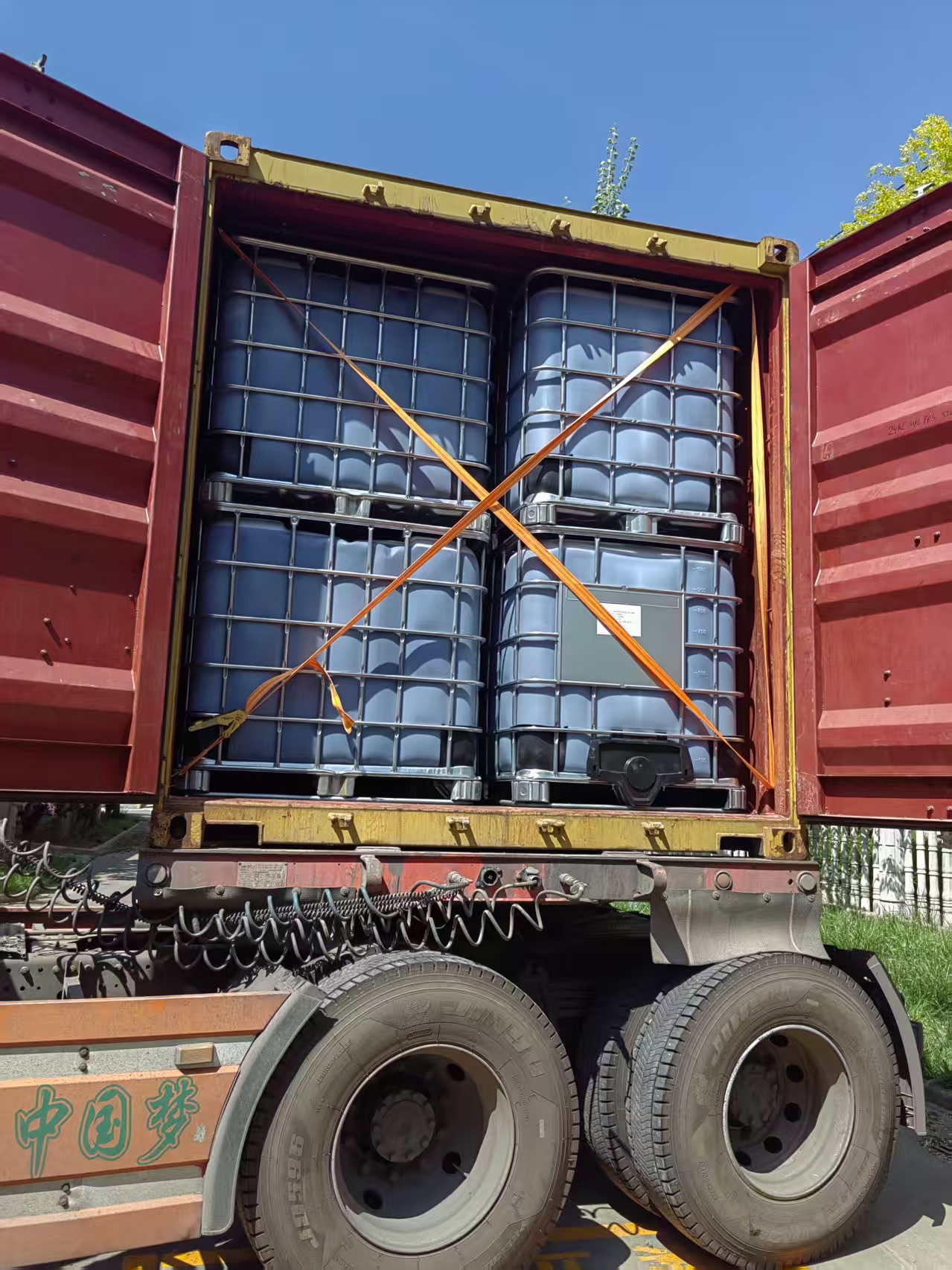
Packaging options for polyester polyol include IBC drums and galvanised iron drums.
FAQ
Which management-system certifications apply to XINFA polyester polyol grades?
Hengshui Xinfa Polyurethane Materials Co., Ltd. holds ISO 9001 quality management system certification, ISO 14001 environmental management system certification and ISO 45001 occupational health and safety management system certification. All products undergo 100% testing before shipment. Product-specific compliance documents for a particular market should still be requested for the exact grade being purchased, because the applicable requirements differ by application and destination.
Can one supplier cover insulation, appliance, adhesive, mining and fertilizer-coating grades?
Yes. The XINFA polyester polyol portfolio includes the High Flame Retardant series, the Pentane System series, the High Water-based series, the Adhesive series, the Mining series and the Controlled-release Fertilizer Coating series, together with the catalysts and flame retardants used in those systems. Published capacity is 50,000 tons per year, with a monthly production capacity of 4,000 metric tons, and OEM and ODM services are available.
What drives the budget when moving from one grade to another?
Budget is driven by the grade specification, the hydroxyl value and viscosity band, any flame-retardant or application-specific requirement, the order volume, the packaging format and the delivery term (FOB or CIF). The published minimum order quantity is 1 metric ton. Because grade-level pricing is quoted per specification and volume, a budget comparison should be based on a written quotation for the shortlisted grades rather than on a single list price.
Can a grade be tested before a production order is placed?
A trial should start with a sample and the current technical data sheet for the specific grade. The request should state the application, the processing equipment, the target density or film thickness, the blowing agent and the expected hydroxyl value range, so that the sample matches the intended use. After the trial, the pre-shipment test is the acceptance reference for the production order.
What lead time should a distributor plan for?
The typical production lead time is 15–20 days, against a monthly production capacity of 4,000 metric tons. Distributors should add time for pre-shipment testing, documentation and international transport when planning stock, and should confirm the schedule for the specific grade and packaging format before committing to a customer delivery date. Grade and specification inquiries can be directed to the XINFA export team.
Conclusion
The shortest route to the right polyester polyol grade is to start from the application family and then verify the published numbers. For PIR spraying, sandwich panels and PU pipes, the High Flame Retardant series is the shortlist, with XF-2007 specified at 200±10 mgKOH/g and 15,000±3,000 CPS at 25 °C. For home appliances, the Pentane System series applies, with XF-435 at 500±50 mgKOH/g. For moisture-sensitive mining work, KXF-350 is specified at ≤0.1% moisture and NXF-400 at 400±20 mgKOH/g with ≤0.15% moisture. For fertilizer coating, XF-270 is specified at 260±10 mgKOH/g and 3,000±500 CPS at 25 °C. The High Water-based and Adhesive series complete the portfolio and should be shortlisted against their current technical data sheets.
Next step: sample, data sheet or quotation
Share the application, the processing equipment and the target specification, and the XINFA team can confirm the grade shortlist, the sample and the quotation. The full product portfolio is available in the XINFA product brochure (PDF), and grade-specific requests can be sent to admin@xinfapu.com or +86 156-3365-7995.
Have Questions or Need More Details?
Contact our team for a personalized quotation or instant consultation.
Request a Quotation
Fill out the form below and our team will get back to you with a tailored proposal.
WhatsApp Direct Chat
Prefer to chat in real-time? Message us on WhatsApp for instant assistance & quick answers.
- Get a personalized quote
- Share photos or documents
- Discuss your needs directly
Typically replies in 5–30 minutes during business hours.