
Solving Foam Collapse: The Role of Polyester Polyol in Rigid Foam Dimensional Stability
Foam collapse in rigid PU and PIR systems is usually a resin-side problem before it is a machine-side problem. When a foam rises and then sinks, warps, or separates from its facer, the polymer matrix has failed to build enough strength to hold the cells while the blowing gas is still moving through the cell walls. Aromatic polyester polyols with a higher hydroxyl value and controlled branching raise crosslink density and initial green strength, which is the mechanism that supports dimensional stability. For formulators, the fastest route to a fix is to examine the Polyester Polyol component first, then revisit catalyst balance and processing.
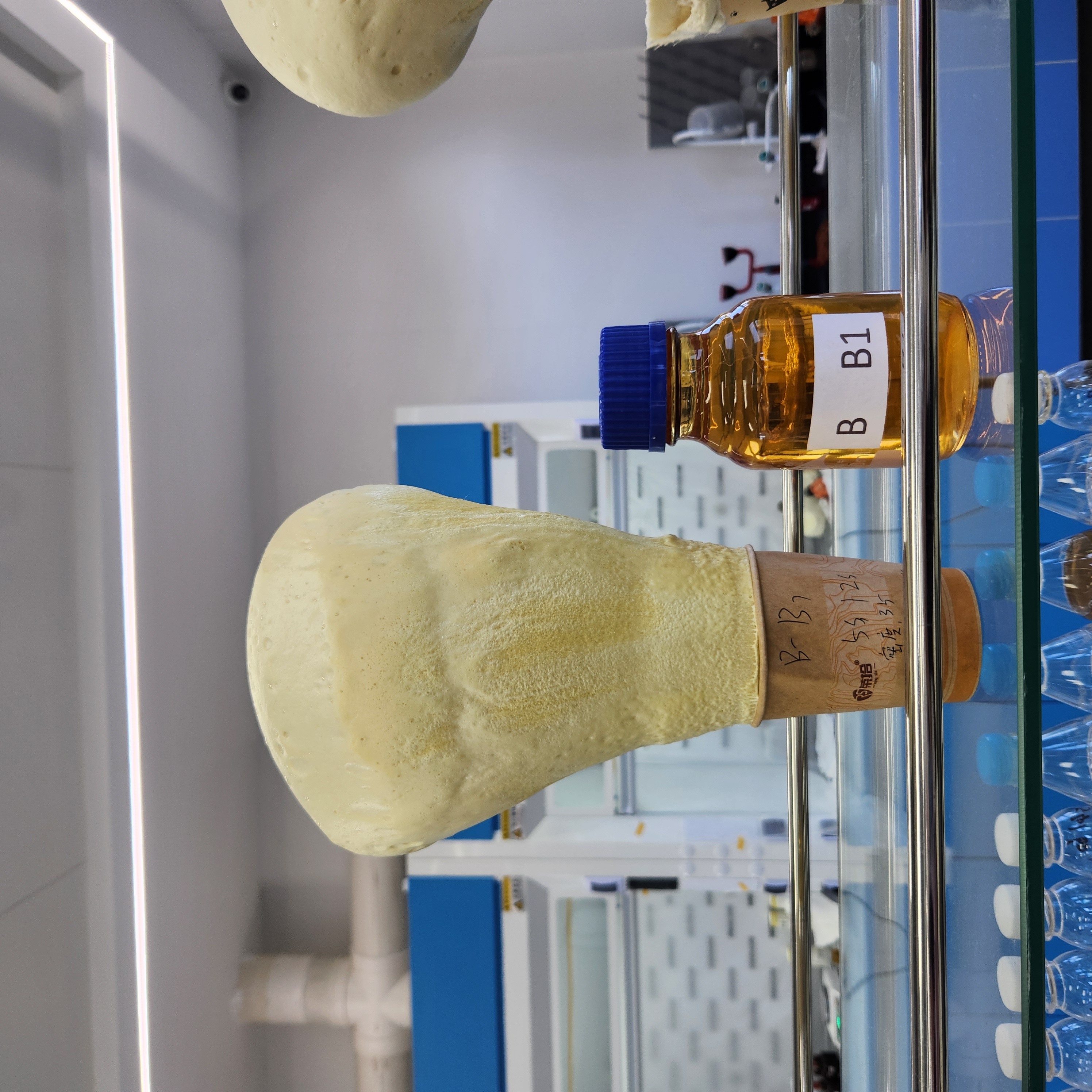
Rigid foam sample evaluated for cell structure and dimensional behaviour. Image: XINFA.
What Foam Collapse and Post-Demould Shrinkage Actually Are
Three failure modes are often grouped under the word “collapse”, and they have different causes. Separating them is the first diagnostic step.
- Collapse during rise. The foam expands, then visibly sinks or contracts before the matrix gels. The gas generated by the blowing agent is leaving the cells faster than the polymer can build wall strength. Rising temperature, over-catalysis of the blowing reaction, or a resin with low reactivity and low functionality are common contributors.
- Post-demould shrinkage. The part looks correct at demould and then loses thickness, bows, or ripples over the following hours and days. This is a diffusion-driven effect: blowing gas escapes the cell and is replaced by air at a different rate, and the pressure inside the cell drops. If the cell wall is not rigid enough, the cell contracts and the part follows.
- Adhesion loss and delamination. The foam pulls away from a metal facer or substrate. Often this is shrinkage expressing itself at the interface, combined with weak initial green strength.
All three share one underlying condition: insufficient structural integrity of the cell wall during the window in which the gas balance is still changing. That is why the hydroxyl value, branching and moisture content of the resin matter more than most formulators initially expect.
Why Rigid Foam Failures Keep Coming Back to the Resin
Rigid foam demand is large and still growing. Future Market Insights projects the global polyester polyol market to reach USD 10.1 billion in 2025, which reflects how widely these resins are used across insulation, appliances, panels and pipes.
At the same time, the blowing-agent landscape has shifted. Pentane-based and hydrocarbon-blown systems are now standard in appliance insulation and continuous sandwich panel lines, and PIR systems are used widely where fire performance matters. Hydrocarbon blowing agents bring a specific technical consequence: they plasticise the polymer matrix to some degree and they diffuse through cell walls. A foam that passes a visual check at the end of the line can still shrink in the warehouse if the resin did not deliver enough crosslink density.
This is why Pentane-based Polyester Polyol grades are not interchangeable with general-purpose grades. The resin has to be selected for the blowing agent, the demould time and the service temperature, not simply for its viscosity. In practice, formulations that fail tend to fail in the same place: the resin contributes too little reactivity and too little branching for the blowing system in use.
The Resin-Side Levers: Hydroxyl Value, Branching and Moisture
Hengshui Xinfa Polyurethane Materials Co., Ltd. (XINFA) is a manufacturer of polyester polyols and polyurethane catalysts based in Jizhou, Hebei, China, operating a polyester polyol capacity of 50,000 tons per year. Its aromatic polyester polyol range is organised by application family, which makes it easier to match a grade to a collapse problem.
1. Hydroxyl value determines crosslink density
A higher hydroxyl value means more reactive hydroxyl groups per unit mass, which produces a tighter crosslinked network once the resin reacts with isocyanate. A tighter network gives the cell wall more rigidity at the moment the gas balance starts to change. In XINFA’s Pentane System series, the highest grade, XF-435, carries a hydroxyl value of 500±50 mgKOH/g, while XF-2020 sits at 200±10 mgKOH/g. That is a wide spread of reactivity from one family, and it is the primary dial for a shrinkage problem.
2. Aromatic branching stiffens the cell wall
Aromatic Polyester Polyol chemistry is built on phthalic anhydride and similar aromatic raw materials, which introduce ring structures into the polymer backbone. Ring structures are stiffer than flexible aliphatic chains, so the resulting foam resists deformation at the cell wall. Combined with higher functionality, this is the second lever: it is not only how many crosslinks form, but how rigid the segments between them are.
3. Moisture and acid value erode the margin
Moisture is an isocyanate consumer. Water reacts with isocyanate and releases CO2, which adds blowing that the formulator did not plan for and can rupture cell walls at a critical moment. Acid value matters for reaction kinetics and for batch consistency. This is why the specification limits in a rigid foam grade are tight: XF-435 is held to an acid value of ≤3.0 mgKOH/g and moisture ≤0.15%, while lower-reactivity grades such as XF-360 are held to acid value ≤2.0 mgKOH/g and moisture ≤0.15%.
4. Catalyst balance must follow the resin, not lead it
Catalysts fine-tune the gel/blow relationship, but they cannot compensate for a resin that is fundamentally under-functional for the application. XINFA supplies rigid-foam catalysts such as PC-8 (N,N-dimethylcyclohexylamine, CAS 98-94-2, purity ≥99%, density 0.849 g/mL at 25°C, boiling point 158–159°C) and PC-5 (pentamethyldiethylenetriamine, CAS 3030-47-5, content ≥98%, density 0.829 g/cm³ at 24°C). These are used to adjust cream, gel and tack-free times after the resin has been correctly selected.
The XF-435 Reference Point: Pentane System Grade Specifications
The Pentane System series is XINFA’s Rigid Foam Polyester Polyol family for hydrocarbon-blown insulation, covering home appliances, polyurethane pipes, sandwich panels and PIR systems. The specifications below are the published values for the five grades in this family.
| Grade | Hydroxyl value (mgKOH/g) | Acid value (mgKOH/g) | Moisture (%) | Viscosity at 25°C (cps) |
|---|---|---|---|---|
| XF-435 | 500±50 | ≤3.0 | ≤0.15 | 10000±2000 |
| XF-390 | 400±20 | ≤2.0 | ≤0.15 | 2000±500 |
| XF-360 | 370±20 | ≤2.0 | ≤0.15 | 1500±500 |
| XF-2402N | 240±10 | ≤1.5 | ≤0.1 | <8000±1500 |
| XF-2020 | 200±10 | ≤1.5 | ≤0.1 | <7000±1000 |
Pentane System Polyester Polyol series, published specifications. Source: XINFA product data.
Read as a troubleshooting set, the table shows a clear progression. XF-435 offers the highest hydroxyl value and the highest viscosity in the family, which suits systems that need maximum early strength and can handle a thicker resin component. XF-390 and XF-360 provide high reactivity at much lower viscosity, which matters where pumping and metering windows are tight. XF-2402N and XF-2020 are lower-reactivity grades for systems where dimensional stability is already under control and other properties take priority.
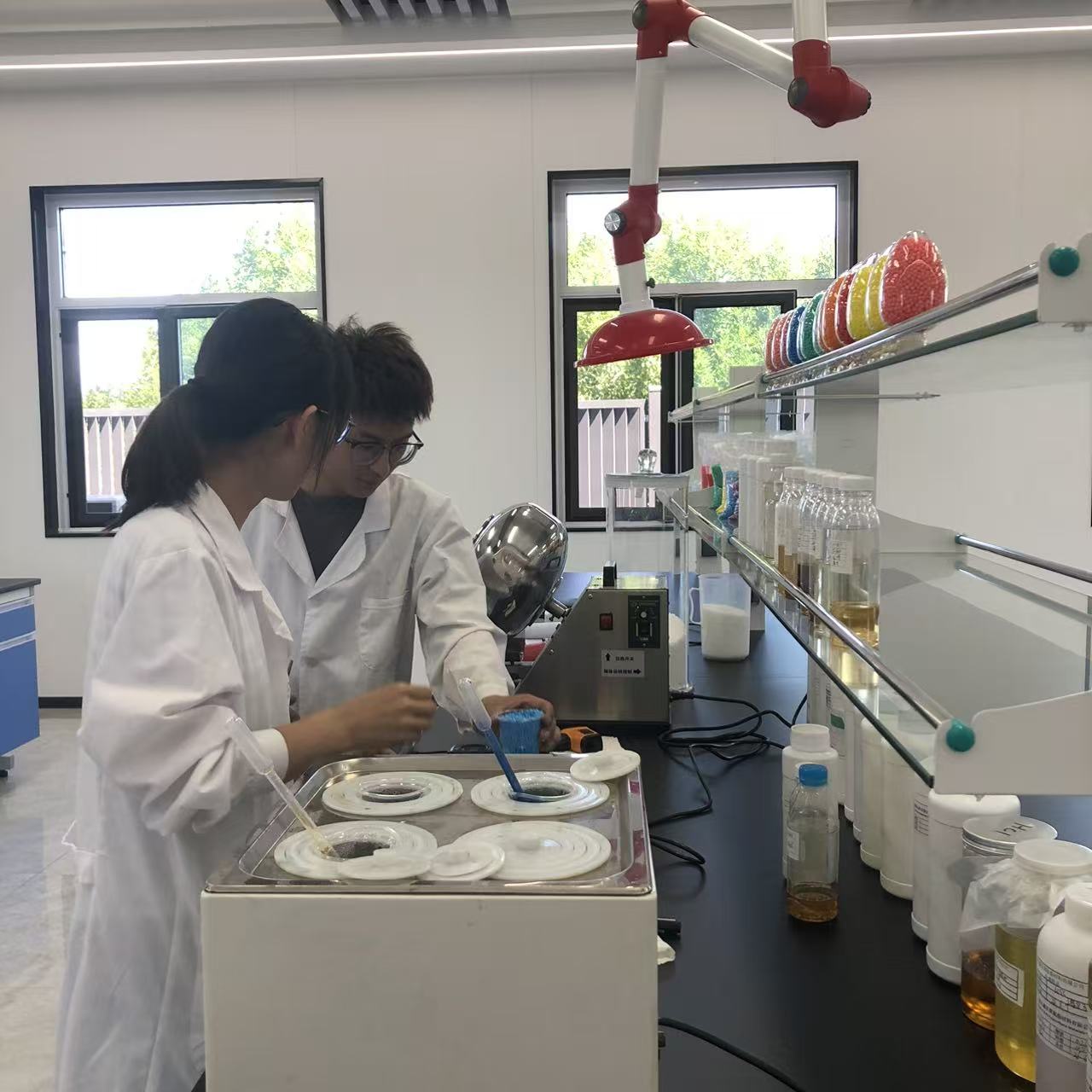
Formulation and resin testing at the XINFA laboratory, where grade adjustments for foam systems are evaluated.
Step-by-Step: Troubleshooting a Collapsing Rigid Foam System
The sequence below keeps the investigation ordered so that resin changes are not made blindly. Each step produces a decision, not just an observation.
Step 1 — Classify the failure
Confirm whether the foam collapses during rise or shrinks after demould. Record thickness and flatness immediately after demould and again after an ageing interval, under the same storage temperature. A part that is dimensionally correct at demould and wrong later points to a resin rigidity problem. A part that never reaches full rise points to reactivity and gas evolution.
Step 2 — Audit every moisture source
Moisture is not only in the polyol. Check the isocyanate, the catalyst streams, the blowing agent, fillers and substrate condition. The polyol specification is the easiest reference point: the Pentane System grades are held at ≤0.15% moisture, and the lower-reactivity grades at ≤0.1%. If incoming resin is at the top of its moisture window and other streams add water, the system can behave like an over-blown foam.
Step 3 — Recalculate the resin blend hydroxyl value
Blends dilute reactivity. If a high-hydroxyl-value grade has been cut with a lower one for cost or viscosity reasons, the blended hydroxyl value may no longer support the demould time. Recalculate the blend and compare with the grade that originally passed validation.
Step 4 — Move up the hydroxyl value ladder
If the failure is post-demould shrinkage and moisture is under control, stepping to a higher-hydroxyl-value grade within the same family is the most direct change. In the Pentane System series this means moving from XF-2020 or XF-2402N toward XF-360, XF-390 or XF-435. Viscosity rises with hydroxyl value, so confirm that the metering equipment can handle the higher-viscosity component before the trial.
Step 5 — Rebalance catalysts only after the resin change
Once the resin is fixed, adjust gel and blow timing with the amine and tin catalysts in the system. Changing both at once makes the result unreadable. Rigid foam catalysts such as PC-8 and PC-5 are typically used to tune the reactivity profile after the resin decision is settled.
Step 6 — Lock the specification and verify consistency
Once a grade passes, the specification has to be enforced batch to batch. Hydroxyl value, acid value, moisture and viscosity are the four parameters that predict whether the next delivery will behave like the trial. XINFA operates 100% testing on production and holds ISO 9001:2015 certification (certificate 04322Q31390R1S, valid to 2028-07-14) for the production of oligomeric polyester polyols, which is the system that underpins batch-to-batch consistency for grades such as XF-2007.
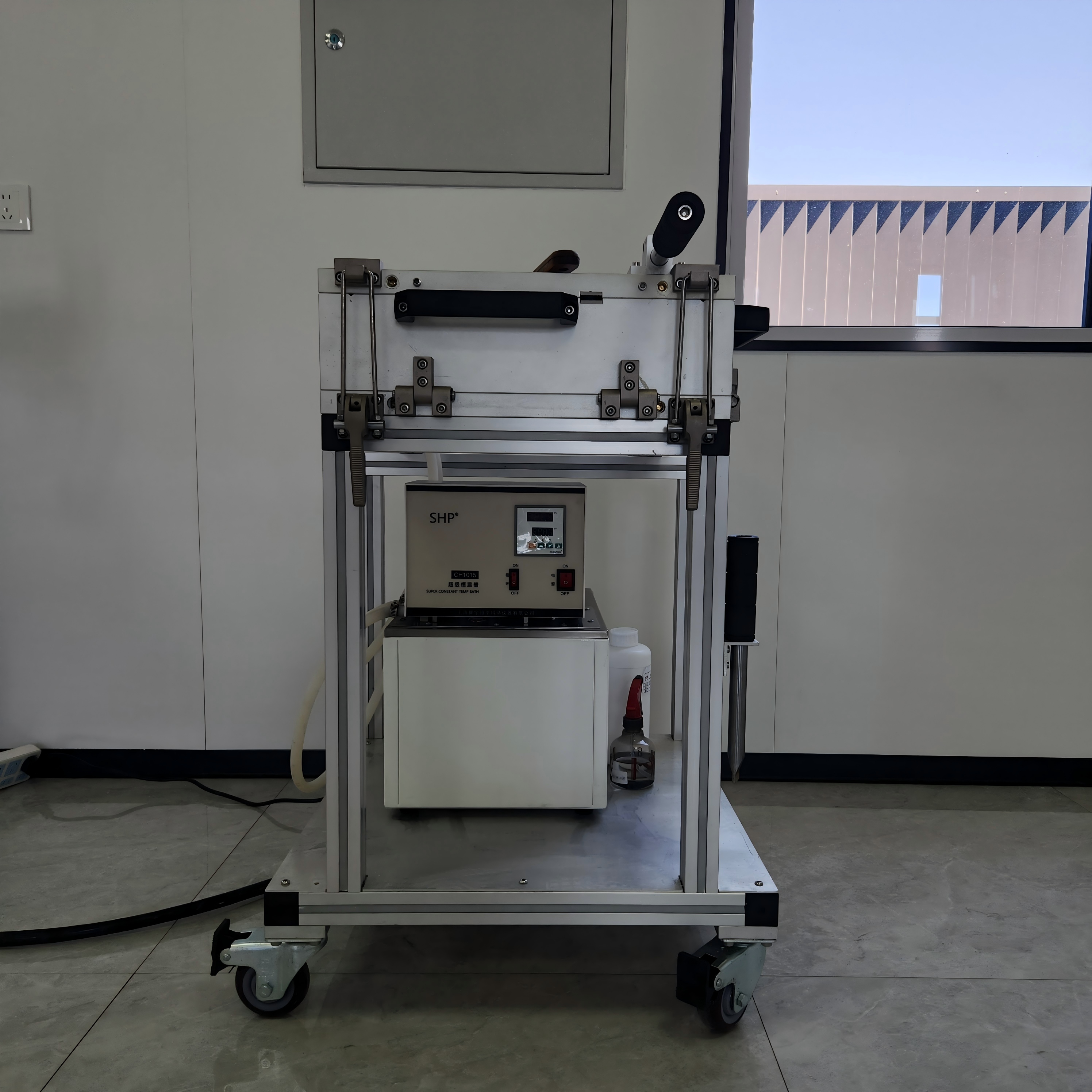
Processing trials on a foam machine help separate resin effects from equipment settings.
Where Dimensional Stability Matters Most
The same resin logic applies across applications, but the consequences of shrinkage differ.
Home appliances and pentane-blown insulation
Appliance cabinets and doors use pentane-blown rigid foam where dimensional change shows up as gap formation, liner deformation or energy performance drift. The Pentane System series is specified for home appliances, and the high-hydroxyl-value grades are the ones used where demould time is short.
PIR sandwich panels
Continuous panel lines run at high line speed, and facer adhesion is critical. PIR Sandwich Panel Polyester Polyol selection has to deliver early strength so the panel can be cut and stacked without bowing. XINFA’s high flame retardant grades, including XF-2007, XF-250P, XF-235P and XF-240P, are positioned for PIR spraying insulation, sandwich panels and polyurethane pipes, with hydroxyl values from 200±10 to 260±10 mgKOH/g and viscosities from 3000–6000 cps up to 15000±3000 cps depending on grade.
Pipe insulation and cold storage
Pipe insulation and cold store envelopes combine foam rigidity with low thermal conductivity requirements. In cold storage spraying foam, the service condition is a temperature gradient across the foam, which makes any residual shrinkage visible as cracking or void formation at the substrate.
Field evidence
Two long-running supply relationships illustrate the point. A spraying foam customer in Poland has taken 500 mt over two years, reporting stable operation across wall spraying, insulation boards, soundproof flooring, leak-proof pipelines and composite materials, with emphasis on mechanical strength, temperature cycling resistance and hydrolysis resistance. An insulation customer in India has taken 100 mt over two years for insulation applications, reporting good thermal insulation alongside high strength and density, fire retardant behaviour and structural support of the pipeline.
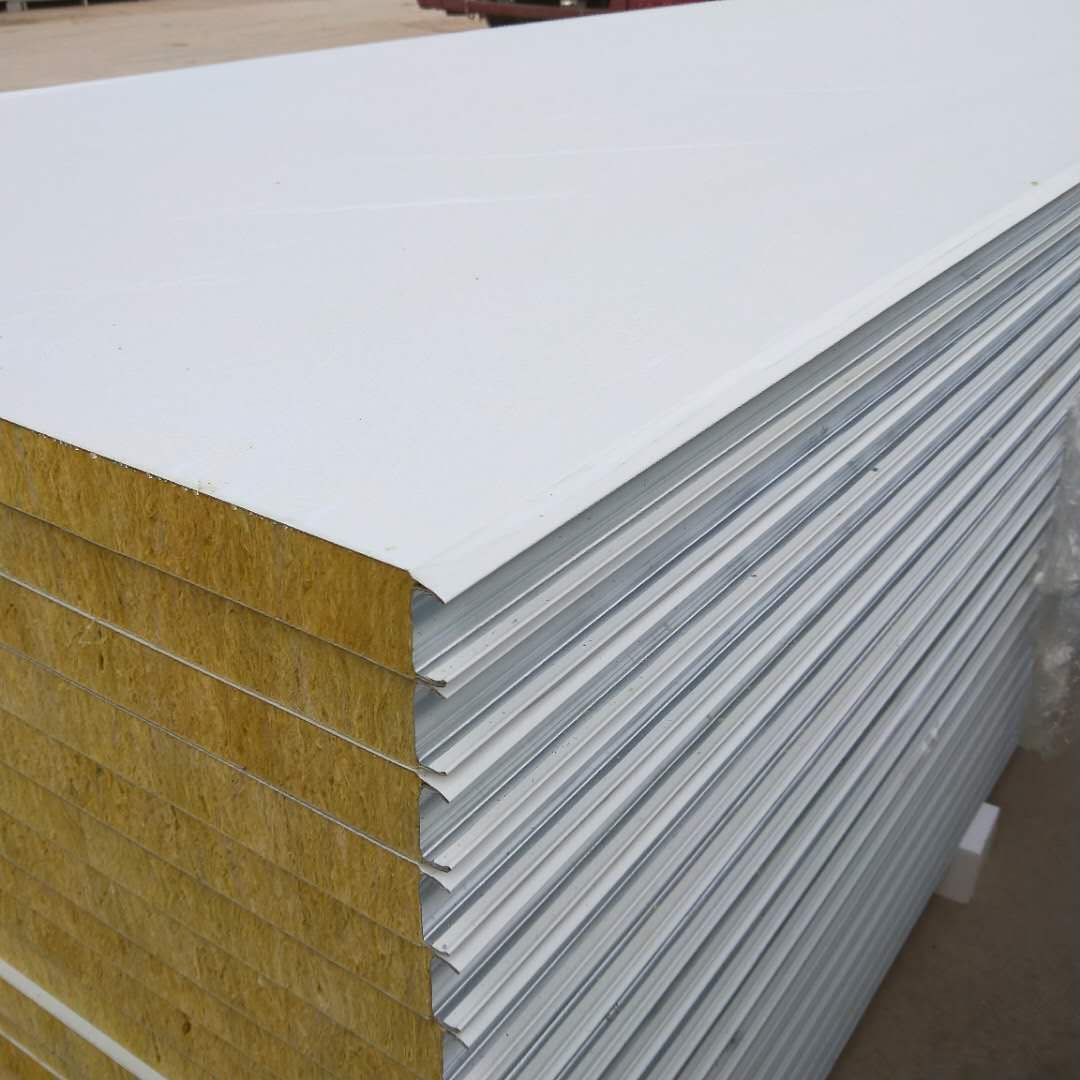
PIR sandwich panels are one of the applications where post-demould shrinkage becomes immediately visible as bowing.
Grade Comparison for Shrinkage-Sensitive Systems
The table below places the Pentane System grades alongside the alternative families XINFA supplies, using published specifications only. It is intended as a starting shortlist for a formulator, not as a performance ranking.
| Family | Grades | Hydroxyl value (mgKOH/g) | Viscosity at 25°C (cps) | Positioning |
|---|---|---|---|---|
| Pentane System Polyester Polyol | XF-435 / XF-390 / XF-360 / XF-2402N / XF-2020 | 500±50 down to 200±10 | 10000±2000 down to <7000±1000 | Hydrocarbon-blown rigid foam: appliances, pipes, panels, PIR |
| Other Types Polyester Polyol | XF-235 / NXF-400 | 230–245 / 400±20 | 10500±1500 / 3000±1000 | Spraying foam and sandwich panels |
| High Flame Retardant Polyester Polyol | XF-2007 / XF-250P / XF-235P / XF-240P | 200±10 / 260±10 / 235±15 / 240±15 | 15000±3000 / 11000±2000 / 3000–6000 / <5000 | PIR spraying insulation, sandwich panels, pipes |
| Phthalic Anhydride Polyester Polyol | XF-3152 / XF-2412 / XF-1752 | 315±15 / 260±10 / 175±10 | 3000±500 / 6000±1500 / <5000 | Spraying insulation, sandwich panels, pipes, appliances |
| High Water-based Polyester Polyol | XF-2003 / XF-2006 / XF-3153 / XF-315G / XF-300W | 170±10 to 315±15 | 1500±500 to 2000±500 | Full water-blown systems, spraying insulation, panels, pipes |
Published specification ranges by product family. Source: XINFA product data.
What to Specify When Ordering Against a Collapse Problem
Constraint-based purchasing avoids most repeat failures. When a grade is selected to solve shrinkage, the purchase specification should carry the parameters that actually control the outcome, not just the grade name.
| Parameter | Why it matters for dimensional stability | Reference value in the Pentane System series |
|---|---|---|
| Hydroxyl value | Sets crosslink density and early green strength | 500±50 (XF-435) to 200±10 (XF-2020) |
| Acid value | Affects reaction kinetics and batch consistency | ≤3.0 (XF-435); ≤2.0 (XF-390, XF-360); ≤1.5 (XF-2402N, XF-2020) |
| Moisture | Extra water generates unplanned CO2 and weakens cell walls | ≤0.15% (XF-435, XF-390, XF-360); ≤0.1% (XF-2402N, XF-2020) |
| Viscosity at 25°C | Determines whether existing metering equipment can process the higher-OHV grade | 10000±2000 cps (XF-435) down to 1500±500 cps (XF-360) |
| Certification coverage | Confirms management system and production scope | ISO 9001:2015; ISO 14001:2015; ISO 45001:2018 |
Where a system needs adjustment rather than a standard grade, XINFA offers OEM/ODM customisation of polyester polyol, supported by 13 management and R&D technicians, a dedicated application centre and laboratory testing. Monthly capacity is 4000 mt, minimum order quantity is 1 mt and production lead time is 15–20 days.
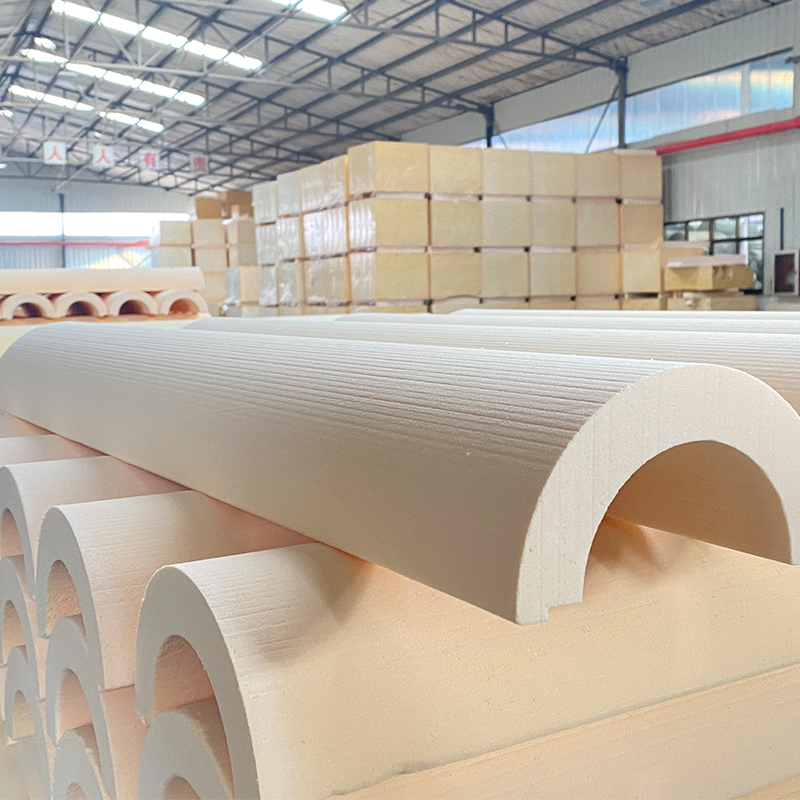
Pipe insulation foam, where shrinkage shows up as voids and loss of structural support.
Frequently Asked Questions
Is XINFA’s polyester polyol production covered by third-party ISO certification?
Yes. The production of oligomeric polyester polyols is covered by ISO 9001:2015 under certificate 04322Q31390R1S, valid from 2025-06-06 to 2028-07-14; ISO 14001:2015 under certificate 04326E01332R101, valid from 2026-06-15 to 2029-06-14; and ISO 45001:2018 under certificate 04326S01211R101, valid from 2026-06-15 to 2029-06-14. All three are issued by Beijing United Intelligence Certification Co., Ltd. The scope of all three certificates is the production of oligomeric polyester polyols and related management activities. Certification confirms the management system and production scope; it does not replace a formulation trial for a specific foam system.
Can the hydroxyl value and branching be adjusted for a system that keeps shrinking?
Yes. XINFA offers OEM/ODM customisation of polyester polyol, supported by 13 management and R&D technicians and a dedicated application centre. In practice, the adjustment starts within the existing families: moving from a 200±10 mgKOH/g grade such as XF-2020 to a 370±20 or 400±20 mgKOH/g grade such as XF-360 or XF-390 raises crosslink density without changing the grade family, and XF-435 at 500±50 mgKOH/g is the highest-hydroxyl-value option in the Pentane System series. Because viscosity rises with hydroxyl value, the metering capability of the line should be confirmed before the trial.
What determines the commercial terms for a high-hydroxyl-value grade?
Commercial terms follow the grade selected, the hydroxyl value and volume, the packaging format and the destination market. The minimum order quantity for polyester polyol is 1 mt, and monthly capacity of 4000 mt supports both trial volumes and repeat production orders. Buyers moving from a lower-hydroxyl-value grade should request a quotation against the specific grade rather than a generic polyester polyol price, because the resin specification itself is the cost driver.
Can a grade be tested before committing to a production order?
A trial quantity can be arranged from the 1 mt minimum order, and XINFA performs 100% testing on production so the trial sample and the subsequent delivery are held to the same specification window for hydroxyl value, acid value, moisture and viscosity. Trial requests can be sent to admin@xinfapu.com or via WhatsApp on +86 166-3389-3646, together with the current formulation parameters and the failure mode being investigated.
What is the lead time for a polyester polyol order?
Production lead time is 15–20 days. XINFA exports to the Middle East, India, Pakistan, Southeast Asia, Central Asia, Europe, North America and South America, and provides technical support and product training after delivery. For a shrinkage investigation, the practical next step is to send the current resin specification and the observed failure mode, so that the recommended grade and the sample quantity are defined in one exchange.
Conclusion
Foam collapse and post-demould shrinkage are usually decided by the resin before the machine is involved. The chain is consistent: higher hydroxyl value raises crosslink density, aromatic branching stiffens the segments between crosslinks, and tight moisture and acid value limits protect the reaction from unplanned gas evolution. Together these three levers determine whether the cell wall can hold its shape while the blowing gas is still redistributing.
For formulators working on pentane-blown rigid foam, the Pentane System series provides a documented starting point, from XF-435 at 500±50 mgKOH/g down to XF-2020 at 200±10 mgKOH/g, all with published acid value, moisture and viscosity limits. The first move in a troubleshooting sequence should be to identify whether the failure occurs during rise or after demould, then to check moisture and blended hydroxyl value before changing catalysts. That order of operations solves more collapse problems than any single additive.
Next Step: Match a Grade to Your Foam System
XINFA supplies aromatic polyester polyols and polyurethane catalysts from a 50,000 ton per year polyester polyol facility, with OEM/ODM customisation, 100% production testing and a 15–20 day lead time. To review the full grade range and specification tables, download the XINFA product brochure (PDF).
For a grade recommendation against a specific shrinkage or collapse problem, contact the technical team at admin@xinfapu.com, by phone on +86 156-3365-7995, or via WhatsApp. Website: www.xinfapu.com.
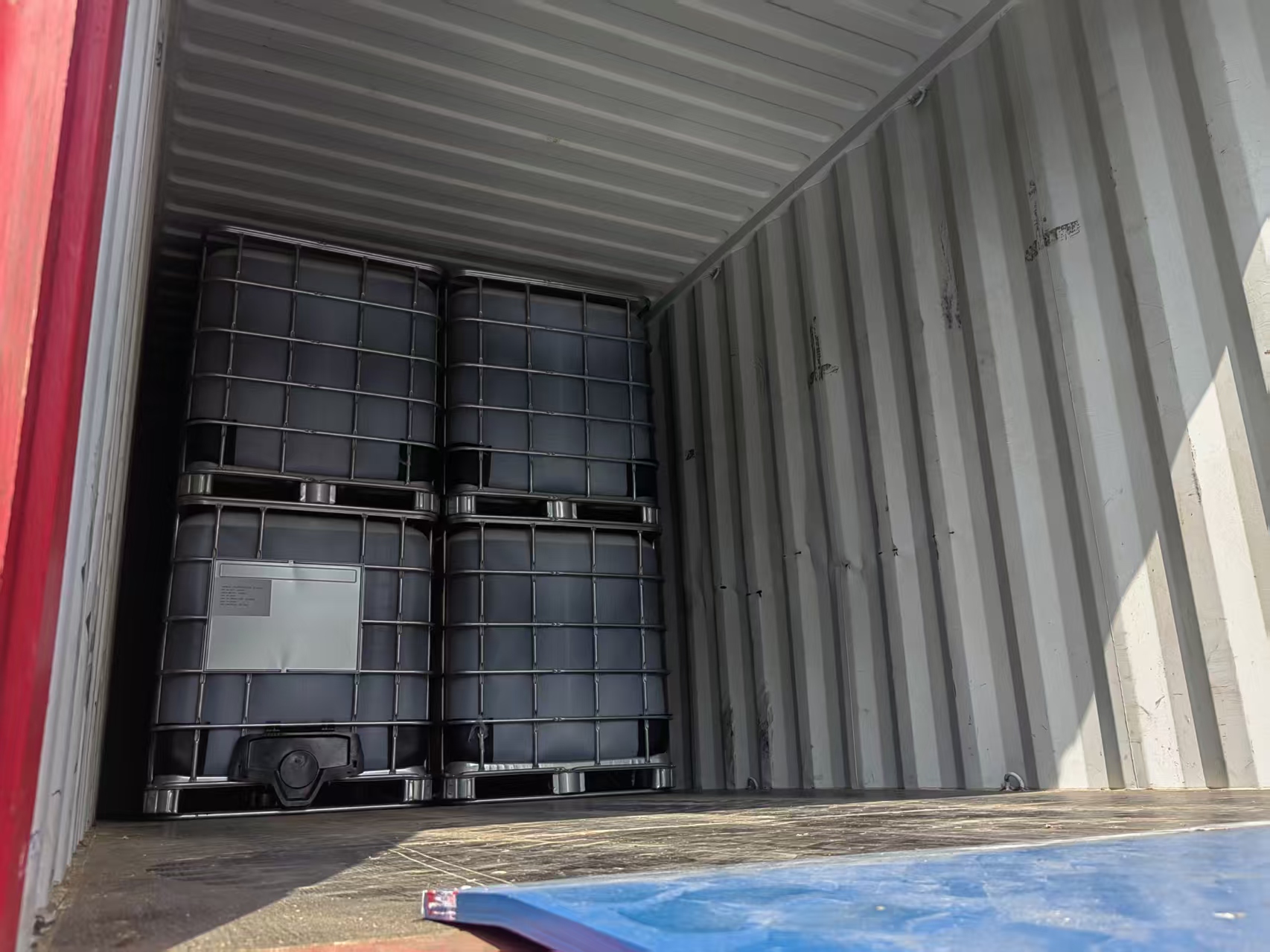
Polyester polyol packaging and dispatch, ready for trial and production orders.
Have Questions or Need More Details?
Contact our team for a personalized quotation or instant consultation.
Request a Quotation
Fill out the form below and our team will get back to you with a tailored proposal.
WhatsApp Direct Chat
Prefer to chat in real-time? Message us on WhatsApp for instant assistance & quick answers.
- Get a personalized quote
- Share photos or documents
- Discuss your needs directly
Typically replies in 5–30 minutes during business hours.