
Polyester Polyol Supplier Scorecard: Series Breadth to Delivery Assurance

A polyester polyol supplier evaluation is finished only when procurement holds three fileable proofs: a grade that fits the application, a written specification the laboratory can test against, and delivery terms that state what happens when a batch falls outside that specification. Catalogue pages, plant photographs and capacity figures are context, not proof.
Hengshui Xinfa Polyurethane Materials Co., Ltd. (XINFA) is a Chinese manufacturer of polyester polyol and polyurethane materials. It produces oligomeric polyester polyols at a plant in the Salt Chemical Circular Economy Park in Jizhou City, Hebei Province, and holds ISO 9001, ISO 14001 and ISO 45001 certification covering the production of oligomeric polyester polyols. Its portfolio is organised into application-specific series rather than a single general-purpose grade — which is precisely the structural claim this article shows you how to test rather than accept.
The scorecard below is written for the evaluation-to-execution stage: buyers who have shortlisted suppliers and now need to convert that shortlist into a purchase order, an incoming-inspection plan and a batch-acceptance rule.
Why polyester polyol evaluations stall at the brochure stage
Evaluations usually stall because the questions are aimed at the company while the risk sits in the grade. Capacity, years of operation and certificate scans describe a business; they do not tell a formulator whether lot 14 will sit inside the hydroxyl band the formulation was balanced around.
A defensible evaluation produces three proofs, and each has a different owner inside the buyer's organisation:
- Series fit — the technical owner. A named grade, for a named application, with a written reason it belongs there rather than in a neighbouring application.
- Specification control — the laboratory owner. A limit for each critical parameter, plus the actual batch value on the certificate of analysis (COA) that ships with the lot.
- Delivery assurance — the purchasing owner. Purchase terms, packaging, lead time and acceptance criteria that survive contact with a warehouse and a production schedule.
Only the first of these can be answered from a catalogue. The other two require documents from the supplier and a decision by the buyer about what will be tested, how often, and what triggers a claim.
One boundary is worth stating plainly, because it is misused in both directions: an ISO 9001 certificate confirms that a quality management system has been audited against a defined scope. It does not certify any single batch's hydroxyl value, moisture content or viscosity, and it is not a substitute for a grade-level specification.
Decision rule for the evaluation team: if a claim cannot be attached to a document you can file and re-check at goods-in, score it as zero — even when the claim happens to be true.
Industry background: a broad market, a narrow grade question
The commercial backdrop supports the breadth argument without settling it. Future Market Insights' polyester polyol market report, published in September 2025, projected the global market at USD 10.1 billion for 2025. That figure describes total revenue across all polyester polyol applications; it says nothing about whether any particular supplier can hold a viscosity window or a moisture ceiling on the grade you need.
The distinction matters at the buying desk. Polyester polyols serve rigid foam and PIR insulation, sandwich panels, spray systems, coatings and adhesives, elastomers, and controlled-release fertilizer coatings, and those applications do not share one specification. A supplier with a single general-purpose grade can quote a market; it cannot automatically serve a formulation that needs a defined hydroxyl band, a moisture limit and a viscosity range at the same time.
The practical consequence is that portfolio structure becomes a procurement criterion rather than a marketing detail. When a buyer's own product range spans insulation, adhesives and coatings, every additional supplier adds a qualification cycle, a second set of acceptance criteria and a separate delivery schedule. Breadth worth paying for is breadth that arrives with a specification per grade.
The series breadth test: map applications to series before you map price
Run the breadth test in one direction only: start from your applications and ask the supplier to answer application by application. A supplier that answers with one grade for every use has told you something useful about its portfolio, and it is usually not what the sales deck intended.
The sequence that works in practice is short. List every application in your current and next-year plan. Ask for the designated series and grade for each. Request the TDS per grade and the COA per batch. Then check that no single grade is being offered across applications whose process conditions differ materially — a pentane-based system grade and a mining grade are not interchangeable merely because both are polyester polyols, and treating them as interchangeable transfers a formulation risk onto your line.
| Application family | XINFA series / grades | What to request in writing |
|---|---|---|
| High flame-retardant rigid foam and PIR insulation | XF-2007, XF-235P, XF-240P, XF-250P | Hydroxyl value band, acid value maximum, moisture maximum, viscosity at a stated temperature, and the flame-retardant package definition for your system |
| Pentane-based foam systems | XF-435, XF-390, XF-360, XF-2402N, XF-2020 | Hydroxyl band, moisture maximum, viscosity at 25 °C, and written confirmation that the grade is designated for the blowing system you run |
| Mining applications | KXF-350, KXF-280 | Moisture maximum, hydroxyl band, viscosity, and batch-level COA values rather than typical values |
| Spraying foam and general system grades (used in the Poland reference project) | XF-2003, XF-2006, XF-3153, XF-315G, XF-300W | Hydroxyl band, viscosity at 25 °C, and application notes for the spray equipment in use |
| Controlled-release fertilizer coating | XF-270 — hydroxyl value 260 ± 10 mgKOH/g; viscosity 3000 ± 500 CPS at 25 °C | Coating-grade designation in writing, batch COA against both stated limits, and the moisture limit for the grade |
| High-hydroxyl, low-moisture grade | NXF-400 — hydroxyl value 400 ± 20 mgKOH/g; moisture ≤ 0.15% | Both limits written into the purchase specification, plus the acid value maximum and viscosity range |
| Water-based and adhesive grades | Designated models within the portfolio — confirm the exact model for your system | The designated model name, TDS, and compatibility data for your substrate or binder system |
| Additional series available for system matching | XF-235, XF-280, XF-Z, XF-B-3, XF-B-4, XF-3152, XF-2412, XF-1752, XF-2002 | TDS and batch COA per grade before any trial allocation |
Two of those rows carry published numbers, and they are the rows to use as the benchmark for how every other row should read. XF-270 states a hydroxyl value of 260 ± 10 mgKOH/g together with a viscosity of 3000 ± 500 CPS at 25 °C. NXF-400 states a hydroxyl value of 400 ± 20 mgKOH/g and a moisture limit of ≤ 0.15%. Those are testable sentences. A statement such as “consistent quality” is not, and it should not earn points in the evaluation.
There is also a support argument for breadth that has nothing to do with chemistry. The company's product list extends beyond polyols into PU catalysts such as TEDA and TEDA A33, and flame retardants TCPP and TEP, which matters when a formulation change requires several components to move together and you would rather not run three qualification cycles with three suppliers.
The four parameters that separate a specification from a description
Every grade in the evaluation file should be described by the same four parameters, in the same units, with a lower or upper limit attached to each. Ask for limits, not typicals, and ask for the test temperature wherever viscosity is quoted.

Hydroxyl value (mgKOH/g)
Hydroxyl value measures the hydroxyl content available for reaction and sets how much isocyanate a formulation needs to reach its target index. A stated band, such as 400 ± 20 mgKOH/g, defines the drift the supplier commits to; the width of that band and where your batch sits inside it both change the calculated isocyanate requirement. This is why the band, not a single figure, belongs in the specification file.
Acid value (mgKOH/g)
Acid value expresses residual acidity in the polyol. It is a stability and reactivity indicator, and it belongs in the file as a maximum rather than a typical, because a maximum is a rejection point you can apply at goods-in. Where a supplier quotes only a typical acid value, the acceptance criterion is still missing.
Moisture (%)
Water consumes isocyanate and generates gas as a side reaction, so moisture is the parameter most likely to disturb a formulation that has been balanced tightly. NXF-400 states ≤ 0.15%, which is the form every moisture limit should take: an inequality with a number and a unit. Moisture limits deserve particular attention where the grade is destined for pentane-based systems or for mining applications, because those are the processes where a small drift is hardest to correct downstream.
Viscosity (CPS at 25 °C)
Viscosity governs pumping, metering and mixing behaviour, and it is temperature dependent. A viscosity figure quoted without a test temperature is not a specification; it is a sentence. XF-270's 3000 ± 500 CPS at 25 °C shows the complete form: value, tolerance, unit and condition.
Two documented examples, and what they do not cover
XF-270 and NXF-400 are the two grades in this portfolio with published values covering hydroxyl value, viscosity and moisture. For every other series, the evaluation file should still require all four parameters, and the absence of a published figure is the reason to request the grade-level TDS and a batch COA — not a reason to assume the number or to accept a generic statement in its place. Where a supplier cannot or will not state a limit for a critical parameter, the honest conclusion is that the parameter is uncontrolled for your purposes.
Capability check: OEM/ODM, capacity and what 100% testing covers
Capability questions are where supplier claims and buyer risk separate most sharply, because capacity figures are almost always company-reported. The evaluation should record the figure, the source and what it implies for your order size.
- Production mode: OEM and ODM production services are offered for polyester polyol, with a minimum order quantity of 1 metric ton on that basis.
- Capacity: company data states 4,000 mt per month, against a company-reported annual polyester polyol capacity of 50,000 tons at a 25,000 m² site.
- Lead time: 15–20 days, stated as a standard range rather than a fixed commitment.
- Quality control: 100% testing is stated as the operating practice.
- Technical resources: 13 management and R&D technicians, supported by more than 30 sets of intelligent production equipment.
- After-sales: technical support and product training.
- Export footprint: the EU, Middle East, Southeast Asia, Central Asia, India, Pakistan, South America and North America, with a stated export share of 10%.
Read those numbers against each other rather than in isolation. A 4,000 mt monthly capacity alongside a 1 mt OEM/ODM minimum means the constraint on a trial order is scheduling and batch allocation, not plant scale — so the useful question is not “can you produce it” but “which production slot and which batch size will you commit to for this grade”. “100% testing” deserves the same treatment: ask which parameters are tested on every lot, which are tested on a sampling basis, and whether the COA value is the tested value or a historical typical.
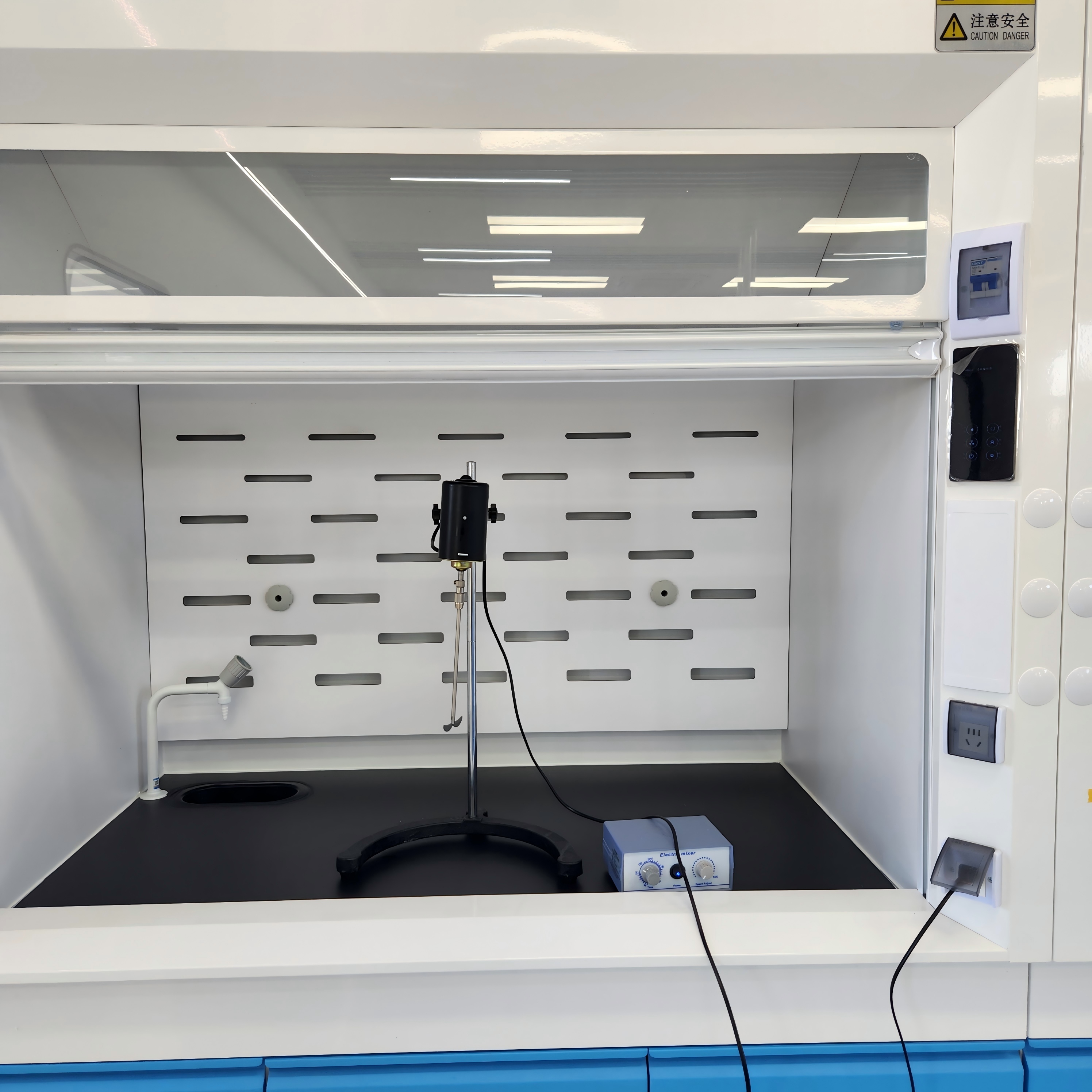
Delivery assurance: purchase terms, packaging and acceptance criteria
Delivery assurance is the part of the evaluation most often reduced to a sentence in a quote, and it is the part that decides whether a good grade arrives usable. The stated purchasing terms provide the frame:
- Minimum order quantity: as requested by the customer.
- Delivery terms: FOB or CIF.
- Acceptance criteria: pre-shipment test.
- Payment terms: T/T and L/C.
Two of these terms need to be made specific before the purchase order is issued. “MOQ as requested” and the 1 mt OEM/ODM minimum are both recorded positions, and they describe different scenarios; the purchase order should state which one governs the grade in question, together with the batch size. “Pre-shipment test” likewise needs content: which parameters, tested by whom, against which limits, and what document the buyer receives before the container is released.
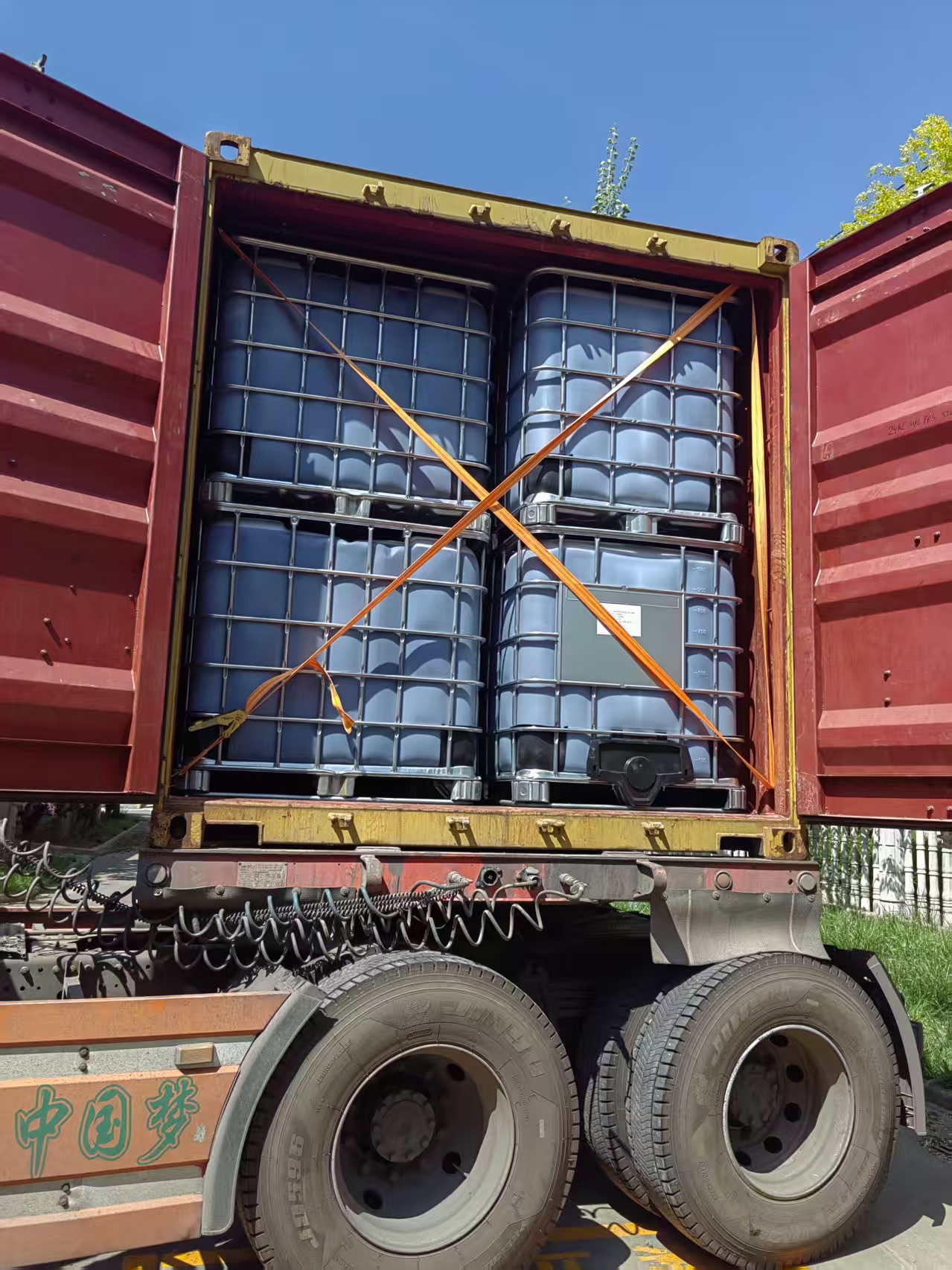
Packaging completes the delivery picture. IBC drums are offered at 1200 kg and 1000 kg, and galvanized iron drums at 225 kg, 200 kg and 170 kg. Net weight per package interacts directly with your acceptance plan — a sampling regime built around 225 kg drums does not transfer unchanged to a 1200 kg IBC, and the retained sample should match the package size you actually receive. Bulk density and fill level assumptions should be confirmed rather than inferred from the drum label.
Writing the specification into incoming inspection
The step from supplier specification to workable acceptance plan is mechanical once the limits exist, and it is where a supplier evaluation either produces an operating document or ends as a saved PDF. A procedure that holds up under audit usually contains seven elements:
- Grade sheet per product. One row per parameter: hydroxyl value, acid value, moisture, viscosity, each with unit, lower and upper limit, and the test method agreed with the supplier.
- Sampling rule per lot. Define the sample point, the quantity drawn and the sealed retention sample, sized to the package actually shipped.
- COA requirement. A batch COA against the agreed limits ships with every lot; a certificate restating “typical” values is not a batch record.
- Hold-for-release status. Material stays quarantined until the declared tests are complete or the COA has been verified against the grade sheet.
- Test split. State which parameters the buyer re-tests on arrival and which are accepted on the supplier's COA with periodic verification — a decision that should reflect how tightly the formulation is balanced.
- Nonconformance rule. Define what constitutes a failed lot, the notification window, who bears the cost of retest or return, and the replacement commitment.
- Trend review. Plot each parameter by lot over time. A grade drifting toward the edge of its band while still passing is a supply conversation to have before it becomes a production problem.
Certification belongs in the same file, with dates. XINFA's ISO 9001 certificate 04322Q31390R1S, issued by Beijing United Intelligence Certification Co., Ltd. against GB/T 19001-2016 / ISO 9001:2015, is valid to 14 July 2028. ISO 14001 certificate 04326E01332R101 (GB/T 24001-2016 / ISO 14001:2015) and ISO 45001 certificate 04326S01211R101 (GB/T 45001-2020 / ISO 45001:2018) were issued on 15 June 2026 and are valid to 14 June 2029. All three scopes cover the production of oligomeric polyester polyols. Diarising those expiry dates is a five-minute task that prevents a compliance gap later.
What verified project references look like
Project references are useful only when they state application, quantity, duration and what was observed. Two references from this portfolio meet that bar, and both should be read as supplier-provided documentation of application and duration rather than as an independent performance guarantee for your line.
In Poland, a spraying foam project used the 3943 series (grades XF-2003, XF-2006, XF-3153, XF-315G and XF-300W) at a scale of 500 metric tons over a two-year implementation period. The recorded applications are wall spraying, insulation boards, soundproof flooring, leak-proof pipelines and composite materials, with reported stable operation. The reference lists high mechanical strength, high wear resistance, resistance to high and low temperature cycling, hydrolysis resistance and aging resistance as the properties the project relied on.
In India, a pipeline insulation project used the 3941 series (XF-435, XF-390, XF-360, XF-2402N and XF-2020) at a scale of 100 metric tons over two years, with reported good thermal insulation performance. The reference cites high strength and density, thermal conductivity, fire retardancy and structural support for pipelines.
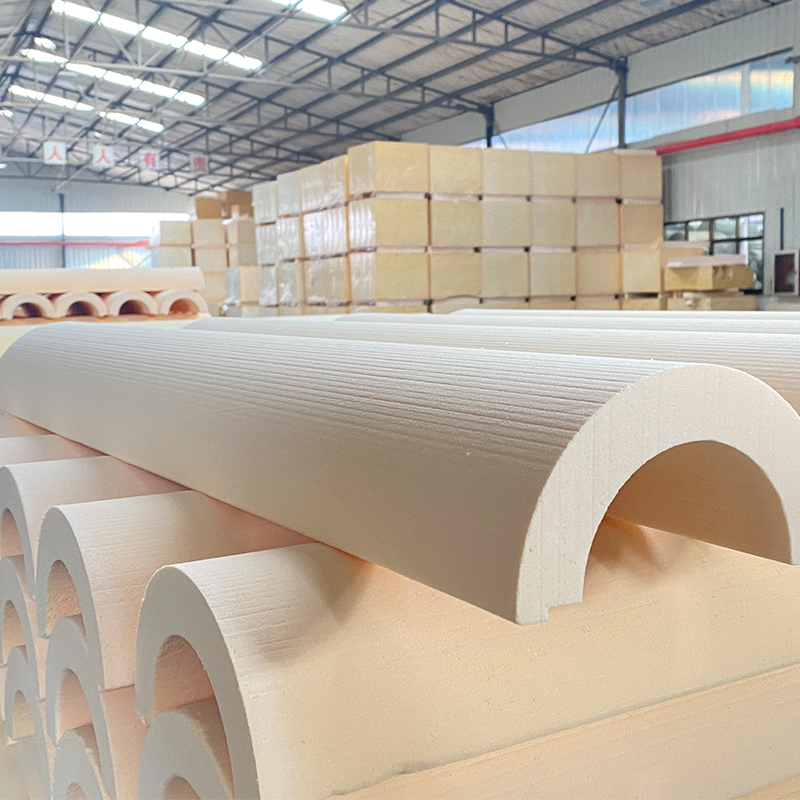
The caution is structural, not sceptical. A two-year project shows that a grade has been run at scale in a comparable application; it does not establish that the same grade will meet a different hydroxyl band, a different blowing system or a different ambient condition. That remains a question for your trial, tested against the grade sheet built in the previous section.
Scoring matrix: what to accept as evidence
Scoring is where the evaluation becomes comparable across suppliers. Weight each criterion by its consequence on your line, then mark it against a document rather than a statement.
| Evaluation criterion | What suppliers typically claim | Evidence that settles it | XINFA's documented position |
|---|---|---|---|
| Series breadth | “Full range” | Named grade per application, with a TDS per grade | XF, KXF and NXF series spanning flame-retardant, pentane-based, mining, spraying, fertilizer-coating, water-based and adhesive grades |
| Specification control | “Stable quality” | Parameter limits per grade plus a batch COA against those limits | 100% testing stated; NXF-400 at 400 ± 20 mgKOH/g and moisture ≤ 0.15%; XF-270 at 260 ± 10 mgKOH/g and 3000 ± 500 CPS at 25 °C |
| Capacity | “Large capacity” | Company-reported annual and monthly figures, plus a committed production slot | 50,000 tons per year polyester polyol capacity (company-reported); 4,000 mt per month |
| Customisation | “OEM available” | Written OEM/ODM scope, MOQ and lead time | OEM and ODM production; 1 mt MOQ on that basis; 15–20 days lead time |
| Quality system | “ISO certified” | Certificate number, scope, issuing body and expiry date | ISO 9001 04322Q31390R1S to 2028-07-14; ISO 14001 04326E01332R101 and ISO 45001 04326S01211R101 to 2029-06-14 |
| Commercial terms | “Flexible terms” | Incoterm, payment method and acceptance test point | FOB or CIF; T/T and L/C; pre-shipment test as the acceptance criterion |
| Packaging | “Export packing” | Net weight per IBC and per drum | IBC 1200 kg and 1000 kg; galvanized iron drum 225 kg, 200 kg and 170 kg |
| After-sales | “Technical support” | Named support scope and training availability | Technical support and product training |
A supplier that scores well on the left columns of this table but cannot supply documents for the middle column should be scored on the documents, not on the relationship. Conversely, a supplier with a narrower series but complete documentation may be the lower-risk choice for a single-grade requirement — breadth is worth paying for only where breadth is used.
Frequently asked questions
Which certificates should a polyester polyol supplier hold, and how do I check them?
Look for management-system certificates whose scope names polyester polyol production, and record the number, issuing body and validity dates. XINFA holds ISO 9001 certificate 04322Q31390R1S against GB/T 19001-2016 / ISO 9001:2015, valid to 14 July 2028; ISO 14001 certificate 04326E01332R101 against GB/T 24001-2016 / ISO 14001:2015; and ISO 45001 certificate 04326S01211R101 against GB/T 45001-2020 / ISO 45001:2018, both valid to 14 June 2029. All three were issued by Beijing United Intelligence Certification Co., Ltd. and cover the production of oligomeric polyester polyols. Verify the number with the issuer, confirm the scope matches the product form you buy, and diarise the expiry dates.
Can a supplier match an application-specific series instead of one general grade?
Yes, where the portfolio is organised by application. XINFA's series cover high flame-retardant grades (XF-2007, XF-235P, XF-240P, XF-250P), pentane-based systems (XF-435, XF-390, XF-360, XF-2402N, XF-2020), mining (KXF-350, KXF-280), spraying and general system grades (XF-2003, XF-2006, XF-3153, XF-315G, XF-300W), controlled-release fertilizer coating (XF-270) and a high-hydroxyl, low-moisture grade (NXF-400), with water-based and adhesive grades also available. OEM and ODM production is offered with a 1 mt minimum order quantity, against a stated monthly capacity of 4,000 mt and a 15–20 day lead time.
What purchasing terms and payment methods apply?
The stated terms are MOQ as requested by the customer, FOB or CIF delivery, pre-shipment test as the acceptance criterion, and payment by T/T or L/C. Note that the capability record separately states a 1 mt minimum order quantity for OEM/ODM production; because these are two different recorded positions, the purchase order should specify which one governs the grade being bought, along with the batch size and the parameters covered by the pre-shipment test.
How do I write hydroxyl value and moisture limits into acceptance testing?
Convert each stated limit into a grade-sheet row with a unit, a lower or upper bound and a test method, then require a batch COA against those rows. For NXF-400 the rows are a hydroxyl value of 400 ± 20 mgKOH/g and moisture ≤ 0.15%; for XF-270 they are a hydroxyl value of 260 ± 10 mgKOH/g and a viscosity of 3000 ± 500 CPS at 25 °C. Acid value and, for XF-270, moisture should be added as stated limits from the grade TDS. Hold each lot until the COA has been checked against the grade sheet, keep a sealed retention sample, and set a written rule for what happens when a lot falls outside a limit.
What lead time and packaging should I plan for?
Plan on a stated lead time of 15–20 days from order confirmation, and confirm the production slot at the point of order rather than assuming it. Packaging options are IBC drums at 1200 kg and 1000 kg, and galvanized iron drums at 225 kg, 200 kg and 170 kg; choose the package size before finalising the sampling plan, since the sample size and retention quantity should match the container you receive. With pre-shipment testing as the acceptance criterion, the practical next step is to request the grade sheet and a sample for the specific series you intend to run, then set the acceptance limits before the first bulk order.
Conclusion: score the document, not the deck
Series breadth is easy to claim and hard to verify; specification control and delivery assurance are the opposite, because they leave a paper trail that either exists or does not. An evaluation that scores series fit, written parameter limits, batch-level COAs, committed production slots and stated acceptance criteria will separate suppliers faster than any capability presentation, and it produces the incoming-inspection plan as a by-product rather than as a later project.
For buyers moving from evaluation to execution, the sequence is fixed: confirm the designated grade for each application, obtain the four-parameter grade sheet, agree the pre-shipment test content, and write both into the purchase order. If the next step is a grade sheet rather than a quotation, the company brochure can be downloaded here, and grade-level technical questions can be sent to admin@xinfapu.com.
Have Questions or Need More Details?
Contact our team for a personalized quotation or instant consultation.
Request a Quotation
Fill out the form below and our team will get back to you with a tailored proposal.
WhatsApp Direct Chat
Prefer to chat in real-time? Message us on WhatsApp for instant assistance & quick answers.
- Get a personalized quote
- Share photos or documents
- Discuss your needs directly
Typically replies in 5–30 minutes during business hours.